bike friendly student housing
At Cal Poly, your commute shapes the rhythm of your entire day. Choosing bike friendly student housing near campus can replace parking searches, crowded lots, and car expenses with a faster, more flexible routine. In San Luis Obispo, a well-planned home base gives you easier access to campus paths, local streets, coffee shops, groceries, and the outdoor lifestyle that makes SLO feel elevated.
Key Takeaways
- At Cal Poly, your commute shapes the rhythm of your entire day.
- Choosing bike friendly student housing near campus can replace parking searches, crowded lots, and car expenses with a faster, more flexible routine.
- In San Luis Obispo, a well-planned home base gives you easier access to campus paths, local streets, coffee shops, groceries, and the outdoor lifestyle that makes SLO feel elevated.
The right apartment should support your bike from the moment you arrive home. Secure storage, controlled access, convenient routes, and practical maintenance details matter just as much as a stylish floor plan. Use this guide to evaluate whether a community truly supports a car-free or car-light college experience.
Elevate Your Commute: Why Walkability and Bike Access Matter at Cal Poly
The best commute-friendly housing near Cal Poly combines a reasonable distance to campus with direct access to sidewalks, bike routes, and campus paths. It also provides a secure place to store your bicycle indoors, ideally behind controlled access. That combination protects your time, reduces dependence on campus parking, and makes daily travel feel like part of your lifestyle instead of another task to manage.
The True Cost and Stress of Campus Parking
Driving to class can add friction before the school day even begins. You may need to account for a parking permit, fuel, vehicle maintenance, insurance, and the time spent searching for an open space. At busy periods, a short drive can turn into a longer arrival routine, followed by a walk from a distant lot. Parking rules, limited availability, and weather exposure add more variables to an already full schedule.
Living close enough to walk or ride changes that equation. A bicycle can carry you from your apartment to a lecture, lab, club meeting, or downtown stop without requiring a parking space at every destination. That flexibility is especially useful for students balancing classes, work, athletics, and social plans. A commute measured in simple movement, rather than traffic and parking, gives you more control over the day.
Seamless Connection Between Walkability and Biking
Walkability and cycling work best together. Sidewalks support short trips, while a bicycle expands your practical range across San Luis Obispo. Look for housing with convenient connections to Cal Poly routes, neighborhood streets, and established paths such as the Bob Jones Trail. A connected route helps you choose the right mode for each trip, whether you are walking to a nearby café or riding across town with a backpack and class materials.
The Ultimate Checklist for Evaluating Bike Friendly Student Housing
Not every apartment with a bike rack qualifies as bike friendly student housing. A rack placed beside a public sidewalk may leave a high-value bicycle exposed to theft, rain, and accidental damage. During a tour, inspect the storage area, ask how residents enter it, and trace your likely route to Cal Poly. These details reveal whether cycling is built into the community or added as an afterthought.
Indoor and Secure Storage Options
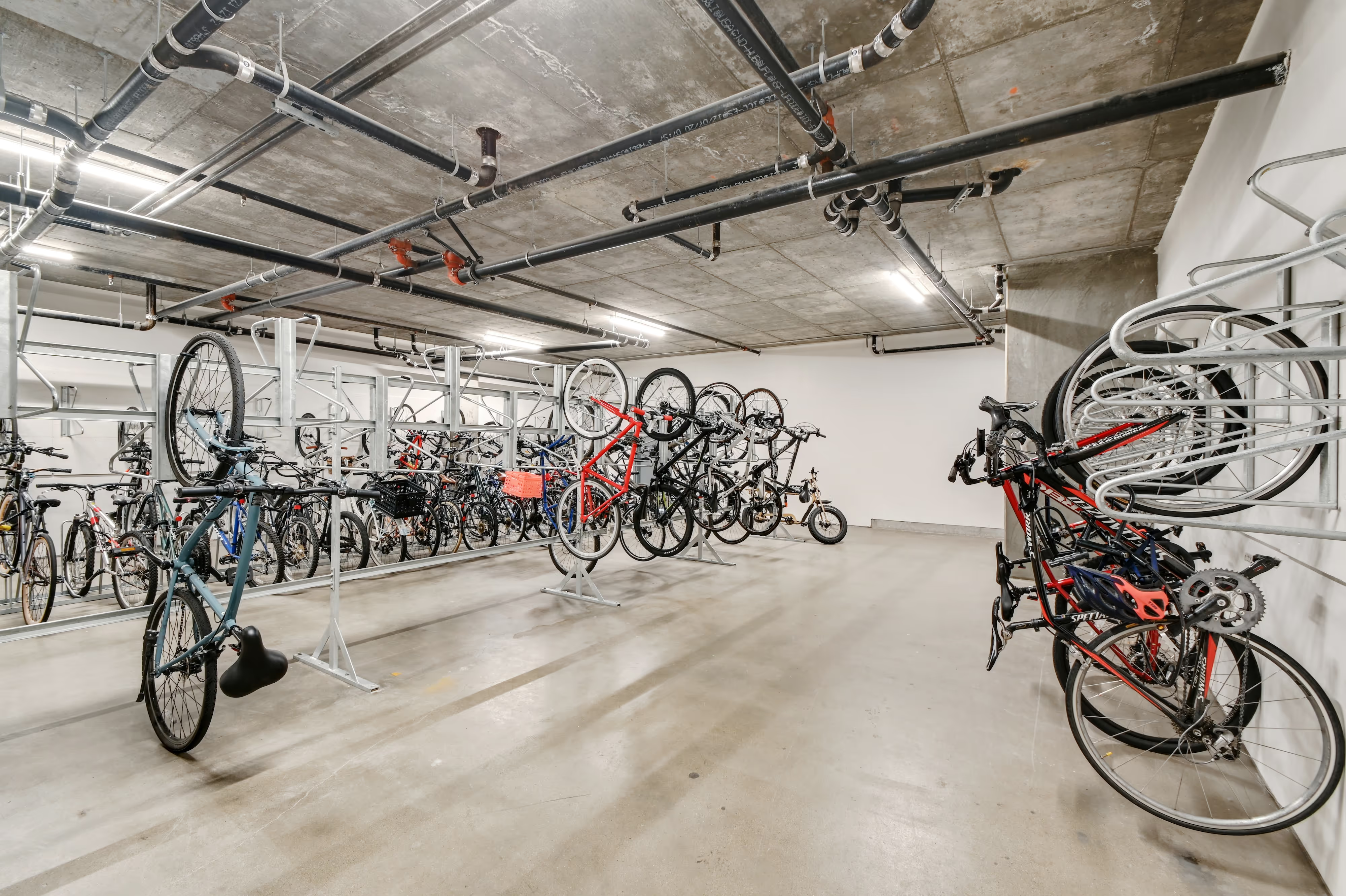
Ask whether the property offers an indoor bike room rather than only outdoor racks. Secure storage should have controlled entry, strong anchoring points, adequate lighting, and enough space to load and remove a bicycle without scraping handlebars against nearby frames. Swipe access or another resident-only entry system helps limit exposure to unauthorized visitors. An indoor room also keeps bikes away from direct sun, coastal moisture, and storms.
- Controlled access: Confirm that only authorized residents can enter the storage room.
- Secure locking points: Look for fixed racks that support the frame, not a temporary rail or loose stand.
- Room to maneuver: Check whether there is clearance for bicycles, helmets, bags, and locks.
- Weather protection: Favor an enclosed area that reduces exposure to rain, dirt, and intense sunlight.
- Convenient placement: A location near an entrance or elevator makes everyday use more realistic.
- Clear resident policy: Ask about registration, access hours, abandoned bicycles, and responsibility for personal equipment.
Proximity to Protected Lanes and Campus Paths
Storage solves only half the commute. Walk the first portion of your proposed route and note intersections, traffic speed, sidewalk continuity, bike lanes, lighting, and elevation changes. San Luis Obispo’s hills can make one route feel far easier than another, particularly when you are carrying supplies or riding an e-bike. A housing location near connected streets and campus paths can reduce stressful crossings and make regular riding more comfortable.
Also consider your return trip after evening study sessions or activities. Well-lit access, visible entrances, and a route that does not depend on isolated stretches can support confidence after dark. When a community combines secure storage with practical connections, it delivers the everyday convenience students actually need from bike friendly student housing.
Beyond the Bike Rack: Premium Perks for the Modern Cyclist
A basic rack gives your bicycle a place to stand. Premium bike-friendly housing gives it a place to belong. That difference matters in San Luis Obispo, where a bicycle may carry you to class, downtown errands, club meetings, and weekend trail rides. Leaving it outdoors can expose the frame, chain, battery, and electronics to theft, sunlight, moisture, and accidental contact. An enclosed bike room with controlled entry treats your transportation like valuable personal equipment, not communal clutter.
Protecting Your Gear From Weather and Theft
College campuses are active, crowded places, and bicycle theft is a familiar concern for students. A quality storage room should sit inside the residential building, use resident-only access, and provide fixed locking points that secure the frame. Look for bright lighting, clear sightlines, sufficient aisle space, and a location that does not require carrying your bike across an exposed parking lot. These details support safer daily habits because storing your bicycle is convenient enough to become automatic.
Indoor storage also protects the equipment that keeps a ride smooth. Covered parking helps reduce exposure to dust, rain, coastal moisture, and direct sunlight. That matters even more for an e-bike, whose battery and electrical components require thoughtful storage. Ask whether the property has a written charging policy, designated outlets, fire-safety procedures, and restrictions on charging damaged batteries. A secure room should protect your gear without creating a new safety concern.
Preparing for the San Luis Obispo Hills
San Luis Obispo rewards riders with scenic streets and access to outdoor recreation, though the terrain can make route planning part of the experience. A modest incline may feel very different after a full day of classes or when your backpack is loaded. Before choosing an apartment, test the route toward Cal Poly and note slope, road crossings, traffic patterns, shade, and lighting. An e-bike can make hills more manageable, yet it also deserves secure indoor parking because of its higher equipment value.
What Premium Bike Storage Adds to Daily Living
Pros
- Controlled entry helps limit access to residents and authorized guests.
- Indoor placement shields frames, locks, tires, and batteries from weather.
- Fixed racks reduce the chance of tipping, scraping, or damaging nearby bicycles.
- Convenient access makes cycling practical for early classes and evening activities.
Cons
- Shared rooms may fill quickly during busy move-in periods.
- Residents still need a personal lock and should follow storage policies.
- Charging an e-bike may require property approval and careful battery maintenance.
Car Free Freedom: Comparing the Daily Life of a Driving Student vs. a Cycling Student
Choosing a walkable apartment near Cal Poly can change more than your transportation method. It can reshape the pace of your morning, the cost of your weekly routine, and the amount of energy you bring to class. A driving student manages vehicle access, fuel, maintenance, insurance, and parking availability. A cycling student manages weather, route selection, personal safety, and equipment care. When housing supports both walking and biking, the second routine becomes far more convenient.
The Typical Driving Experience
A short drive does not always equal a short commute. The full trip can include warming up the vehicle, navigating traffic, finding an open space, walking from a distant lot, and repeating the process after class. A car also stays parked while you move between lectures, work, groceries, and social plans. Parking permits, fuel purchases, oil changes, tire care, registration, and insurance add recurring expenses that can compete with books, meals, and activities.
The Premium Walkable and Bikeable Experience
With a well-connected home base, your bicycle becomes a flexible extension of your apartment. You can walk when the destination is nearby, ride when distance or time matters, and leave the car behind for trips that do not require one. A secure storage room eliminates the awkward choice between exposing your bicycle outdoors and bringing it through your living space. The reward is a routine with fewer parking decisions and more control over your schedule.
| Daily consideration | Driving student | Cycling or walking student |
|---|---|---|
| Morning departure | Allow extra time for traffic, parking, and the walk to class. | Leave from home with a route suited to the day’s distance and conditions. |
| Recurring expenses | Vehicle costs may include fuel, insurance, maintenance, registration, and parking. | Primary costs shift toward a bicycle, lock, lights, helmet, and occasional repairs. |
| Between-class errands | Moving the car may require another parking decision or a longer walk. | A bicycle can connect campus, groceries, coffee shops, and nearby neighborhoods. |
| Storage at home | Parking depends on an assigned space, street availability, or a garage. | Indoor, controlled-access storage keeps the bicycle protected and out of the apartment. |
| Daily rhythm | Commute time is shaped by congestion and parking demand. | Travel can feel more direct, active, and adaptable to changing plans. |
The best choice depends on your schedule, route, mobility needs, and equipment. Still, housing that supports walking and cycling gives you more options when a car is unnecessary. In SLO, that flexibility can turn transportation from a daily obstacle into part of the summit-level lifestyle.
Unlock Your Peak: Furnished Living and Verified Apartment Features at Summit SLO
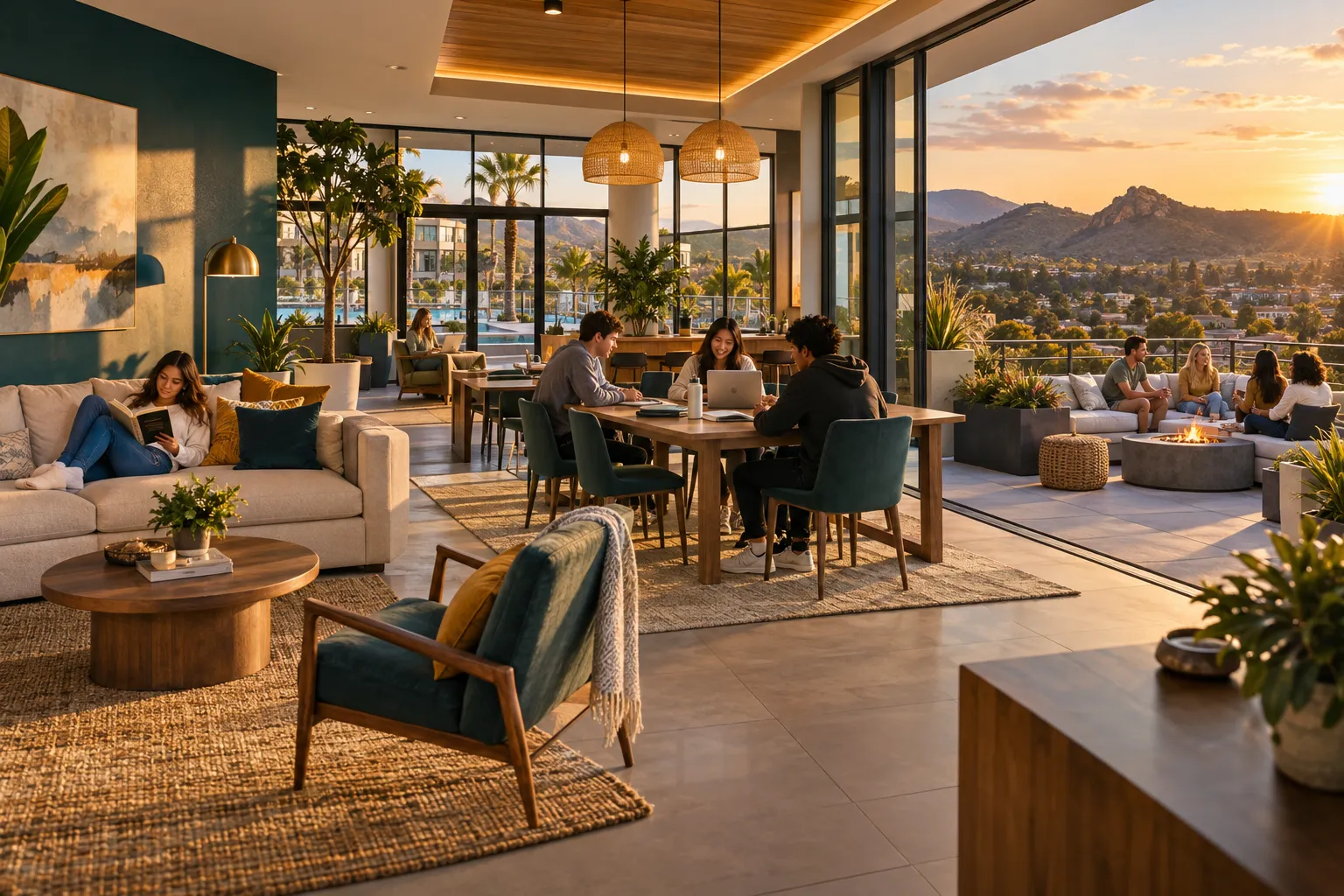
At Summit SLO, transportation is part of a bigger lifestyle upgrade. Your apartment should make it easier to move through San Luis Obispo, settle into a productive routine, and return to a home that feels ready for the next day. Individual leases and furnished apartments bring practical details together, while included high-speed Wi-Fi, cable, water, sewage, and trash simplify recurring housing logistics.
Furnished Units and Apartment Features
Furnished units make the climb into a new season more streamlined. Beds, seating, dining pieces, and study essentials give you a functional starting point without the expense or logistics of moving a full apartment across town. Summit SLO’s published apartment features include stainless steel appliances, granite countertops, engineered hardwood flooring, a washer and dryer, and central heating and AC. Apartments are advertised as fully furnished, with a TV provided in the living room.
- Individual leases: Manage your own housing agreement and monthly responsibility.
- Furnished apartments: Arrive with core furniture already in place.
- Published floor plans: Choose among two- and four-bedroom plans, with published sizes ranging from approximately 738 to 1,334 square feet; measurements and layouts may vary.
- Apartment features: Stainless steel appliances, granite countertops, engineered hardwood flooring, a washer and dryer, and central heating and AC.
- Living room: Apartments are advertised as fully furnished and include a TV in the living room.
- Included utilities: High-speed Wi-Fi, cable, water, sewage, and trash are included.
Addressing Your Bike Storage and Safety Questions
Can you keep a bicycle inside your apartment? In a standard floor plan, you may be able to do so, though narrow hallways, flooring, furniture, and wall finishes can make daily storage awkward. A dedicated indoor bike room gives your bicycle a designated home without sacrificing living space. Before move-in, confirm access procedures, available locking points, storage capacity, and any rules for e-bike batteries or charging.
Where should you store a bike safely in an off-campus apartment? Choose a space inside the building with controlled entry, secure fixtures, lighting, and convenient access from the elevator or entrance. Continue using a personal lock, register your bicycle when possible, and remove lights, bags, and other detachable accessories when you leave it stored. These habits pair with the property’s security measures to create a more dependable routine.
The verdict is clear: quality bike friendly student housing should support the full experience, not just provide a rack. At Summit SLO, explore the furnished apartment features, verified utilities, and floor-plan options, and choose the setup that fits your student lifestyle.