student apartments retail access
For Cal Poly students balancing lectures, labs, work, and plans with friends, errands can take time away from everything else. Student apartments retail access can bring everyday essentials closer to home, making it easier to fit coffee, groceries, and other quick stops into a packed schedule.
Key Takeaways
- Living above or near shops lets Cal Poly students turn errand runs into quick five-minute stops between classes.
- Easy retail access frees up time for labs, study sessions, and social plans instead of long trips across town.
- Having coffee, groceries, and daily essentials just steps away makes a packed schedule feel far more manageable.
- Choosing an apartment with onsite or nearby retail is one of the smartest ways to simplify everyday student life in San Luis Obispo.
The key is understanding what “retail access” includes. A shop inside the building, a grocery store within a comfortable walk, and reliable routes between home and campus can each make daily routines feel more manageable.
Retail access in student apartments means having shops and services on-site or within walking distance. Depending on the location, that may include food, coffee, groceries, and everyday supplies. For students, the practical value comes from shorter errands, fewer transportation hassles, and easier transitions between studying and daily needs.
What Retail Access in Student Apartments Really Means
Defining On-Site and Walkable Retail for Student Housing
On-site retail is located within a residential building or its immediate development, such as a ground-floor shop. Walkable retail is outside the property but reachable on foot using a practical route. The difference matters: a nearby business may be close on a map yet less useful if the walk is inconvenient or the store’s hours do not match your schedule.
The Types of Retail That Matter Most to Students
Start with the stops that solve recurring needs. A coffee shop can make a short break between classes more convenient; groceries and prepared food help with meals; a convenience store can cover forgotten snacks or basic supplies. Check the actual businesses, their hours, and what they sell rather than assuming that “retail nearby” means every essential is covered.
- Food and drink: coffee, quick meals, and groceries for everyday cooking.
- Study and household basics: common supplies and small items needed at home.
- Convenient services: useful stops that fit naturally into a walk to or from campus.
Why the Standard Dorm Experience Falls Short
A residence hall can keep campus close, but students may still need to plan separate trips for food, supplies, and other errands. Shared kitchens, limited storage, and reliance on campus schedules can make spontaneous shopping harder. With student apartments retail access, residents can look for a setup that supports more independent routines, while still checking whether nearby options meet their real needs.
The Real-World Benefits: Time, Money, and Safety
Reclaim Hours Every Week: Retail Access and Time Management
When errands require a car, a rideshare, or a longer trip, even a small shopping list can take a noticeable block of time. Shops nearby can make it easier to pick up what you need between classes instead of building a separate trip into your week.
How Walkable Retail Supports Smarter Student Budgeting
Convenience has a cost, so compare rent with the transportation and time expenses your routine may otherwise involve. That industry finding does not predict the price of a particular apartment, so ask what the rent includes and assess whether the nearby options match your spending habits. A close store can help avoid some impulse purchases made during larger shopping trips, though walkability alone does not guarantee lower costs.
| Routine | What to consider |
|---|---|
| Errands by car or rideshare | Travel time, fares, parking, and whether you need to coordinate with others. |
| Shopping on foot | Store hours, route quality, carrying capacity, and the items available nearby. |
| Retail inside the building | Convenience alongside product range, hours, and any price differences. |
Safety Perks of Living Above the Essentials
Access can also shape how students handle late-day errands. That finding is a reason to examine your own routes and timing, not a guarantee that any location is risk-free. Look for well-lit paths, active streets, clear building entry procedures, and stores open when you are likely to need them. Convenient essentials may reduce the need for a late trip, while personal safety still depends on conditions and choices.
Live, Study, Play: How Retail Fits Into a Resort-Like Living Experience
The One-Stop Lifestyle: Ground Floor Shops Meet Rooftop Lounges
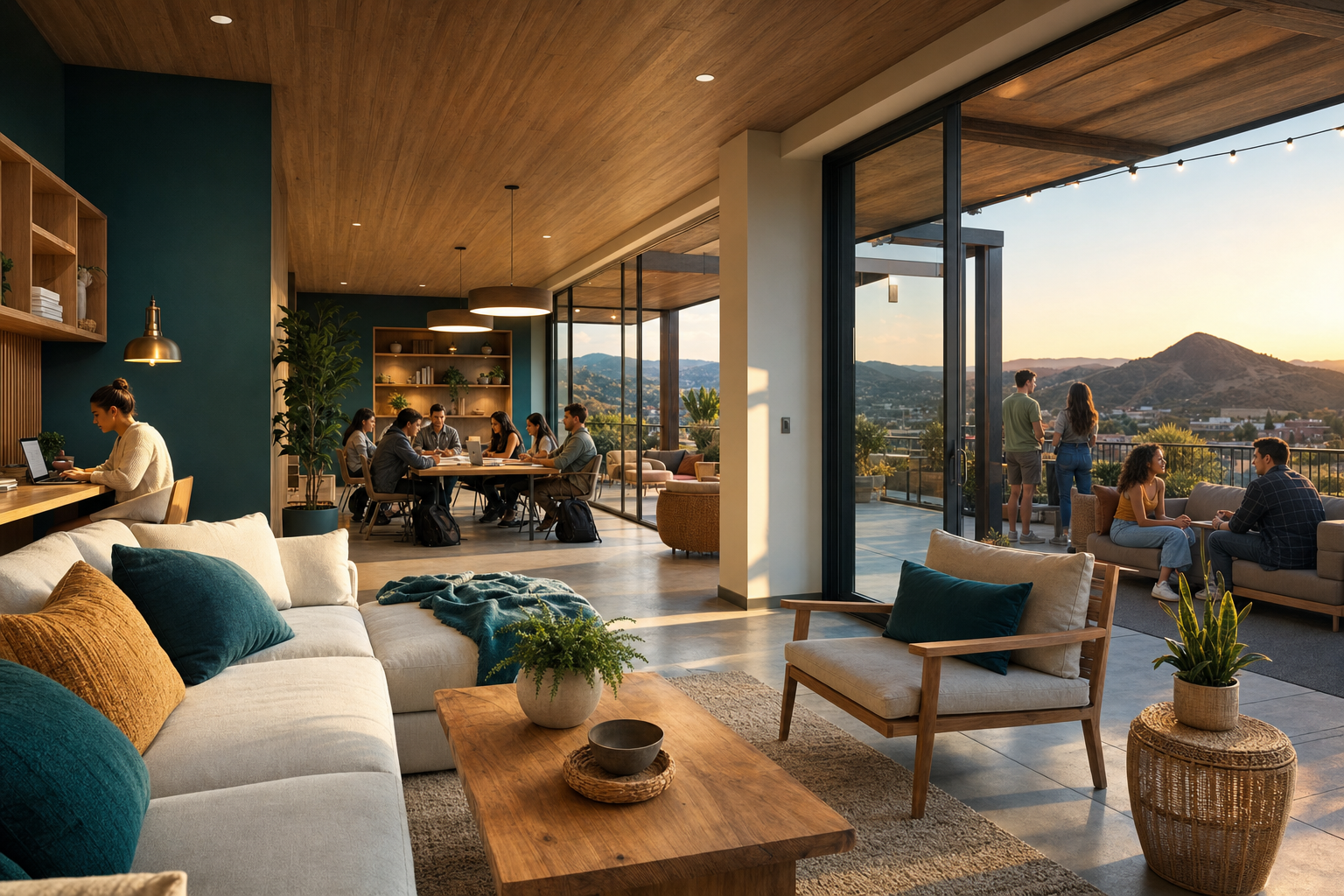
Retail works best as one part of a connected daily routine, not as a standalone perk. A quick stop for coffee or a meal can flow into a study session, a workout, or time with friends without requiring a separate trip across town. At Summit SLO, ground-floor convenience pairs with a rooftop lounge, giving residents options for both everyday needs and downtime. The result is a home base that supports the pace of college life, from an early class to a relaxed evening above the city.
Pairing Retail Access With Premium Amenities (Fitness Center, Study Lounges and More)
Think about how the pieces fit across a full day. A 24/7 study lounge offers a place to focus outside your apartment, while the 24/7 fitness center and climbing wall make it easier to work movement into a busy schedule. Nearby food or coffee can complement those spaces with a convenient break between tasks. That finding points to a broader value: convenience can shape how comfortable and connected home feels, not just how quickly an errand gets done.
A Day in the Life of a Summit SLO Resident
Picture a morning that starts with coffee nearby before heading to class. Between lectures, you return home, grab what you need, then settle into the study lounge for a focused work block. Later, a climbing session at the fitness center resets your energy. When assignments are done, the rooftop lounge creates an easy place to catch up with friends. This kind of rhythm lets everyday needs, academics, wellness, and social time fit into one residential routine.
Daily flow: nearby coffee, campus, focused study, fitness, then rooftop downtime. Each stop has a purpose, and fewer separate trips can leave more room for the parts of college you want to prioritize.
The SLO Advantage: Retail Within Walking Distance of Campus
Cal Poly Convenience: From Lecture Halls to Late-Night Essentials
In San Luis Obispo, location shapes how easily you move between Cal Poly, home, and neighborhood businesses. A walkable option can be especially useful when a packed class schedule leaves little time for a dedicated shopping trip. Before relying on any store for late-day needs, check its current hours and map the route you would actually take. Consider whether the path feels comfortable at the times you are likely to walk, and whether you can carry your usual purchases back without a car.
Exploring the Neighborhood: Scout Coffee, Kona's Deli, California Fresh Market and Downtown SLO
Local stops can give a weekly routine more variety. Scout Coffee offers a neighborhood coffee stop, Kona's Deli is an option for a meal, and California Fresh Market can serve grocery needs. Downtown SLO adds more places to eat, browse, and meet friends. Availability, hours, and walking routes can change, so treat these as points to explore rather than assuming every destination suits every errand. The practical question is how each business fits your schedule and typical spending habits.
How Location Shapes Your Social Life and Academic Routine
Nearby businesses can become natural meeting points, turning a quick coffee run or meal break into time with classmates. They can also help structure a study day: leave campus for a change of scene, pick up food, then return to coursework without planning a long outing.
- Between classes: Identify convenient places for a short break or quick meal.
- For grocery trips: Check the route and consider how much you can comfortably carry.
- For social plans: Note nearby meeting spots that fit naturally into your walk home.
Your Retail Access Checklist: What to Look For When Touring
A useful tour should show how nearby shops fit your actual week, not just point out retail on a map. When evaluating student apartments retail access, check the route, store hours, available essentials, and lease costs together. A little due diligence can help you decide whether the location supports your routine through early classes, busy project weeks, and evenings at home.
Questions to Ask Before You Sign an Individual Lease
Ask specific questions and confirm details in writing when they affect your budget or expectations. “Close by” can mean different things, and a store’s presence does not guarantee the hours or selection you need.
- Which shops and services are on-site, and which require a walk?
- What are their current operating hours, including weekends and school breaks?
- Does advertised rent include utilities, parking, or other recurring fees? Are any retail purchases or services included?
- Are there lease terms or building policies that could affect access to shared spaces or entrances?
- What is the practical walking route from the building, including crossings, lighting, and hills?
For budgeting, separate housing charges from shopping costs. All-inclusive rent can simplify monthly planning, but verify exactly which expenses it covers rather than assuming nearby retail is part of the lease.
Evaluating Retail Options: Hours, Variety and Walkability
Match local options to your real needs: groceries for meals, coffee between classes, prepared food on packed days, and basic supplies when something runs out. Check whether hours align with your schedule, especially when labs or study sessions run late. Walk the route during the times you expect to use it, and consider sidewalk quality, street crossings, lighting, weather, and how comfortably you can carry purchases home. A short distance on a map is not enough; dependable access means the route and opening times work in practice.
Quick check: Could you reach the essentials you use most without arranging a ride or losing a large block of study time? If not, ask what alternatives are available nearby.
Ready to Change Your Altitude? Tour The Summit
Use your tour to test the full routine: apartment, campus route, nearby businesses, and the amenities you expect to use. At Summit SLO, ask the leasing team about current retail access, walkable destinations, lease inclusions, and available floor plans. Then compare those details with your class schedule and monthly budget. The right fit should make everyday logistics feel manageable while leaving more room for study, wellness, and time with friends.
Ready to explore your options? View Summit SLO floor plans and check availability, then schedule a tour to see how the location fits your college routine.
Frequently Asked Questions
What is retail access in student apartments?
Retail access in student apartments means everyday shops and services are either inside your building or within an easy walk from home. That can include coffee spots, grocery stores, convenience shops, and quick-service dining along practical routes between your apartment and campus.
Why is retail access important for Cal Poly students?
Retail access matters for students because it turns errands that eat up an evening into quick stops between classes. When coffee, groceries, and supplies are close by, you spend less time coordinating rides and more time on lectures, labs, workouts, and downtime.
What types of retail matter most in student housing?
The retail that matters most solves recurring needs: food and drink like coffee and groceries, household basics, and convenient services that fit naturally into your walk to campus. The smart move is checking actual store hours and inventory rather than assuming a nearby business covers everything you need.
Does retail access increase rent costs?
Compare that premium against what you would otherwise spend on transportation, rideshares, and time, and always ask exactly what the rent includes before signing.
How does on-site retail benefit students beyond convenience?
How is walkable retail different from on-site retail?
On-site retail sits inside your residential building or its immediate development, like a ground-floor shop, while walkable retail is nearby but outside the property. A store can look close on a map yet be impractical if the route is awkward or the hours do not match your schedule.
How does retail access fit into resort-style student living?
Retail access works best as part of a connected daily routine, not as a standalone perk. At Summit SLO, ground-floor convenience pairs with a rooftop lounge, a 24/7 fitness center, and study spaces, so a quick coffee stop can flow right into a study session or an evening with friends.