student apartment climate control
San Luis Obispo brings bright, warm afternoons and cool coastal evenings, but your apartment should not force you to study in sweat or sleep under three blankets. Smart student apartment climate control puts temperature, airflow, and energy use within reach, helping with heatwaves, uneven bedrooms, and roommate preferences.
Key Takeaways
- Program your thermostat with a schedule that cools during peak study hours and eases off at bedtime, ending thermostat tug-of-war before it starts.
- Add a personal fan or a small portable air conditioner to your bedroom so you control your own comfort zone without arguing over the whole apartment.
- Seal gaps under doors and use blackout curtains to keep cool air where you need it most, especially in south-facing rooms that roast in the afternoon.
- Hold a quick house meeting at move‑in to agree on a temperature range and a plan for hot days, turning potential conflict into a shared strategy.
- Switch to energy‑saver mode on your AC unit and use ceiling fans on warm evenings to cut electricity bills while still staying comfortable.
The goal is a living setup that supports focus, recovery, and shared comfort. Local conditions, building design, HVAC equipment, and daily habits all shape the temperature at your desk and beside your bed.
Change Your Altitude: Mastering Student Apartment Climate Control
Why Temperature Matters for Your College Success
Temperature affects more than comfort. A room that feels too warm can make reading sluggish, disrupt sleep, and turn a long study session into a search for the nearest library. A room that feels too cold can distract you with dry air, chilled hands, or constant thermostat adjustments. Research on student housing reports that indoor temperatures in un-airconditioned accommodations can reach 95°F to 100°F during late summer and early fall terms, leaving less energy for lectures, labs, work shifts, and campus life.
The Summit SLO Advantage: Beyond Basic Comfort
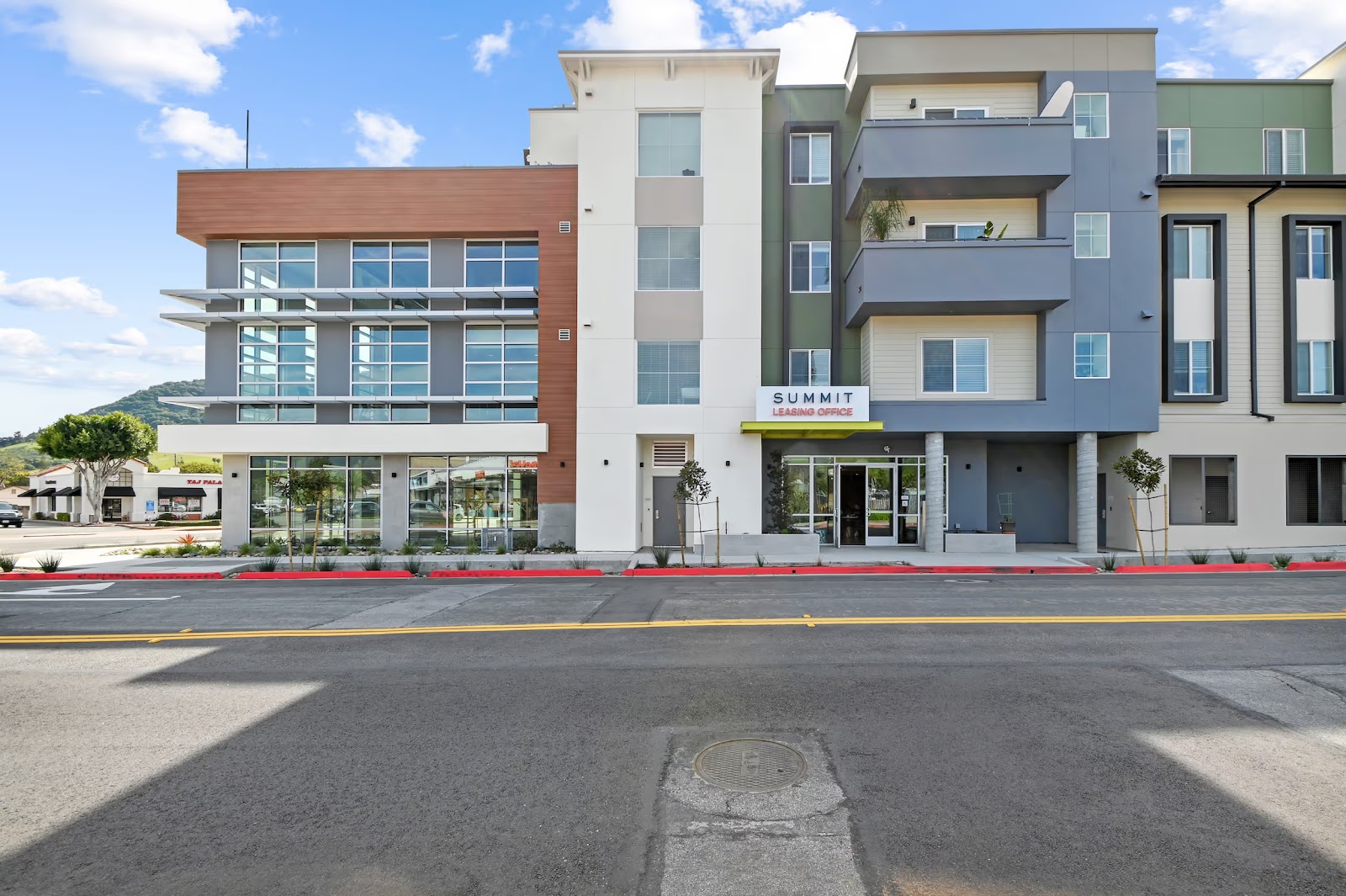
Premium student living treats climate as part of the floor plan. The best setup considers bedroom exposure, sun through windows, ventilation, filtration, thermostat access, and air movement between private rooms and shared spaces. Summit SLO represents that standard: a home designed around productive mornings, comfortable nights, and an easier transition from campus pace to personal downtime. When climate equipment responds efficiently, you spend less time troubleshooting and more time enjoying the view from the summit.
Your Guide to Beating Roommate AC Wars and Staying Cool
Start with facts instead of accusations. Record room temperatures at the same times for several days, note direct sunlight, and identify which rooms feel warmest. Then separate shared needs from personal preferences. A reasonable starting range is often around 72°F to 75°F during study hours, with sleep settings adjusted according to individual comfort, bedding, and airflow. Treat those numbers as a discussion point rather than a universal rule.
The Heat is On: Understanding SLO's Climate & Dorm Room Nightmares
San Luis Obispo's Microclimate: Sun-Drenched Days, Cool Nights, and the Apartment Challenge
San Luis Obispo’s coastal setting creates a daily temperature swing that can feel perfect outdoors and complicated indoors. Solar gain through west-facing windows may raise a bedroom’s temperature during the afternoon, while the marine layer cools the exterior after sunset. Apartments hold heat differently depending on insulation, window orientation, roof exposure, ceiling height, and ventilation. Opening windows can help when outdoor air is cooler, but may be ineffective during the hottest part of the day or after a room has absorbed hours of sunlight.
Why Dorms and Older Apartments Become Ovens: The Limits of Basic HVAC
Older residences may rely on a single thermostat, limited ductwork, or equipment sized without today’s occupancy patterns in mind. One sensor can read a comfortable hallway temperature while a crowded bedroom remains hot. Blocked vents, clogged filters, leaky ducts, and delayed maintenance reduce cooling delivery even when the system runs. Residence halls may also limit schedules or temperature ranges, leaving a room disconnected from the setting displayed on the wall.
| Housing condition | What students may notice | Likely contributing factor |
|---|---|---|
| Single-zone HVAC | One room feels comfortable while another stays warm | One thermostat cannot measure every room |
| Upper-level bedroom | Hot afternoons and restless sleep | Roof exposure and rising warm air |
| Portable cooling unit | Noise, humidity, awkward hoses, or weak coverage | Limited capacity and poor room sealing |
| Delayed service response | Persistent heat despite repeated requests | Filter, refrigerant, electrical, or mechanical issue |
The Upstairs Bedroom Effect: Why Heat Rises and How It Ruins Sleep
Warm air naturally moves upward, and an upper bedroom can also receive heat from the roof, attic, and sunlit exterior walls. That combination can make a second-floor room 10°F to 15°F warmer than a ground-floor living area in some townhomes. Close blinds before peak afternoon sun, keep interior doors open when appropriate, and check that supply and return vents remain unobstructed. These steps cannot correct undersized equipment or poor insulation, but they can reduce the cooling load.
DIY Deception: Why Portable ACs and Fans Fall Short
A fan moves air across your skin but does not lower the room’s actual temperature. Portable AC units can help in a small, sealed room, yet their exhaust hose, window kit, noise, electrical demand, and condensate management create limits. A poorly sealed window sends cooled air outdoors and may pull warm air inside. Window film can reduce some solar gain, but it cannot repair weak insulation or replace mechanical cooling. Check lease rules before adding equipment because properties may restrict window changes or high-load appliances.
Landlord Lapses: When Building Management Fails to Deliver
When cooling remains weak, document dates, room readings, thermostat settings, photos of blocked vents, and written maintenance requests. Describe the condition precisely: no airflow, unusual odor, short cycling, water near the indoor unit, or a system that runs without lowering the temperature. Housing guidance from the University of Virginia and Southern Illinois University advises residents to follow established maintenance channels and report climate-control problems rather than attempting unsafe repairs. Ask for a service timeline and keep copies of every request. Effective student apartment climate control depends on functioning equipment and responsive management, not just a thermostat on the wall.
The Roommate Climate Contract: Negotiating Temperature Peace
Bodily Autonomy vs. Shared Space: The Core of the Conflict
Thermostat disputes feel personal because temperature affects sleep, concentration, clothing, allergies, and physical comfort. Each roommate controls their own body, yet a shared apartment requires a common setting for the living room, kitchen, hallways, and sometimes every bedroom. Start the conversation before a heatwave or exam week. Say, “I cannot sleep when the room stays above 76°F,” instead of blaming someone for making the apartment freezing.
Establishing Fair Thermostat Settings for Study and Sleep
Set a daytime baseline that supports focused work without demanding one comfort level from everyone. Around 72°F to 75°F can provide a reasonable discussion range during study hours, while sleep settings may vary with bedding, room exposure, and personal preference. Test one setting for several days and evaluate actual room readings rather than relying only on the wall display.
Separate shared-space rules from bedroom needs. A common area may follow a stable schedule, while a private room can use a closed door, adjustable vent, fan, or zone control. Agree on quiet hours, thermostat access, and procedures for an extreme heat advisory. A written plan prevents late-night adjustments from becoming a recurring conflict.
The Power of Compromise: Finding Common Ground
Compromise combines a moderate shared temperature with personal comfort tools. The roommate who feels cold might use a sweater, socks, or throw blanket. The roommate who feels warm might use breathable bedding, a desk fan, or targeted airflow. Neither person should be expected to tolerate unsafe conditions, and repeated discomfort can signal ventilation, insulation, or equipment problems rather than a personality clash.
Use a trial period instead of arguing for a permanent winner. Choose a setting, record how each room feels in the morning, afternoon, and at bedtime, then review the results. This turns the dispute into a household experiment. Modern student apartment climate control with separate zones can reduce the need for one resident to surrender personal comfort for the entire floor.
Your Actionable Roommate Temperature Agreement Framework
Create a one-page climate agreement and revisit it when seasons, schedules, or roommates change. Put these decisions in writing:
- Baseline: Choose a shared daytime temperature and a sleep setting.
- Schedule: Identify study blocks, overnight hours, class periods, and travel dates.
- Access: Decide who may adjust the thermostat and how residents will communicate changes.
- Evidence: Use a simple thermometer to document room differences before requesting major changes.
- Personal tools: List acceptable fans, bedding, blinds, and vent adjustments.
- Escalation: Report unusual noise, odors, leaks, weak airflow, or persistent heat through the property’s maintenance process.
- Review date: Recheck the agreement after one week and at the start of a new season.
This protocol protects bodily autonomy while giving the household a clear operating plan. It also creates documentation if a maintenance technician needs to diagnose uneven cooling.
Beyond the Thermostat: Airflow, Fans, and Personal Comfort Zones
Temperature is only one part of comfort. Air movement, humidity, sunlight, bedding, and clothing can change how a room feels at the same thermostat setting. Keep supply registers and return grilles clear, close blinds before afternoon solar gain peaks, and position a fan to circulate air without blocking a vent. A ceiling fan can improve perceived comfort while using less electricity than a major thermostat adjustment, though it does not lower the room’s measured temperature.
Portable cooling equipment requires care. Check lease rules, electrical load limits, window-sealing requirements, drainage, and noise before bringing in a unit. A fan may provide personal relief, while an improperly installed portable AC can add heat, moisture, and frustration. The best arrangement gives shared rooms a stable baseline and private spaces a practical path to individual comfort.
Elevate Your Environment: Modern Climate Control Systems
From Base Camp to the Summit: How Zoned Multi-Split Systems Transform Living
A zoned multi-split system connects multiple indoor units to an outdoor compressor, allowing separate rooms to receive tailored heating or cooling. Each zone can respond to its own exposure, occupancy, and use instead of forcing one sensor to represent the apartment. An upstairs bedroom, sun-facing office, and shaded living room may need different settings. Variable Refrigerant Flow, often called VRF, applies the same principle at a larger scale by moving refrigerant according to demand.
This design can reduce roommate conflict and improve response time. Residents can condition an occupied bedroom without overcooling an empty common area. It also gives maintenance teams more information when one zone develops weak airflow or inconsistent performance.
Smart Thermostats: Your Personal Command Center for Comfort
Smart thermostats add scheduling, occupancy sensing, remote access, temperature history, and programmable setbacks. A setback raises or lowers the target when residents are in class, away for a weekend, or on seasonal break, then restores comfort before they return. Research on occupancy-responsive controls reports HVAC energy reductions of 20% to 40% during class hours and seasonal breaks in student housing. Controls should be simple enough for every roommate to use, with clear permissions and a manual override for unusual conditions.
Beyond Cooling: Humidity Control, Air Quality, and Your Health
A comfortable room also needs clean, properly filtered air. Ask about MERV air filtration, filter replacement schedules, outdoor-air ventilation, and bathroom exhaust. Higher filtration can capture more airborne particles, but equipment must support the filter’s airflow requirements. Humidity management helps limit clammy conditions. Watch for condensation, musty odors, visible moisture, or persistent dust, and report those signs through maintenance rather than masking them with fragrance.
Energy Efficiency: Staying Cool Without Breaking the Bank
Efficient climate control depends on equipment, insulation, window performance, duct sealing, filter condition, and resident habits. Keep exterior doors and windows closed while mechanical cooling operates, use blinds during strong sun, and avoid extreme thermostat changes that make the system run continuously. In higher-education buildings, annual energy costs can exceed $100,000 for a 50,000-square-foot facility, according to the U.S. Department of Energy’s building-energy context. Shared conservation protects operating budgets and can help control utility costs.
What to Look For: Climate Features in Premium Student Housing
| Feature | What it delivers | Questions to ask before leasing |
|---|---|---|
| Zoned multi-split or VRF system | Room-level temperature control | Can bedrooms use separate settings? |
| Smart thermostat | Schedules, occupancy response, and usage visibility | Who controls access and overrides? |
| MERV-rated filtration | Defined particle-filtration performance | What rating and replacement schedule apply? |
| Balanced ventilation | Fresh-air exchange and odor control | How does outdoor air enter the apartment? |
| Responsive maintenance | Faster correction of mechanical faults | How are after-hours HVAC problems handled? |
These details show whether a residence treats comfort as part of its design or leaves students to improvise. Ask to see thermostats, inspect vent access, learn the service process, and confirm which utilities are included. Choose a system that supports independent rooms, predictable schedules, clean airflow, and a smoother climb from base camp to the summit.
Unlock Your Peak: The Summit SLO Living Experience
Your All-Inclusive Climate Sanctuary: What to Expect at The Summit
At Summit SLO, comfort is built into the daily experience rather than left to roommate negotiations. A thoughtfully designed apartment gives you a dependable place to reset after classes, training, work, and campus commitments. Climate features work alongside private bedrooms, shared living areas, modern finishes, and convenient amenities, so your home feels ready for the next climb. Instead of dragging a noisy fan across the floor or improvising with a window unit, you can return to a space designed for consistent temperature, airflow, and rest.
Designed for Your Success: How Climate Control Supports Your Lifestyle
Reliable student apartment climate control supports the routines that keep college life moving. A comfortable bedroom supports deeper sleep. A balanced study space helps you stay focused through readings, projects, and late-night review sessions. A well-conditioned shared lounge makes it easier to host friends, plan club work, or recharge without another thermostat standoff. The larger benefit is control: your living environment supports your schedule instead of dictating it. Look for a residence where temperature management, clean air, responsive service, and energy-conscious operation are connected parts of the resident experience.
Limited Availability: Claim Your Altitude Before the Next Class Climbs On
Your apartment shapes how you study, sleep, connect, and recover. When evaluating student apartment climate control, give the HVAC system the same attention as the bedroom layout, amenities, and commute to Cal Poly. Schedule a tour, ask direct questions about comfort features, and picture your busiest week living there. Limited availability means the best floor plans may not remain open until move-in season. Reserve your spot at Summit SLO and change your altitude before the next class arrives.
Frequently Asked Questions
What is the $5,000 AC rule?
The $5,000 AC rule is not a universal California requirement, but a term sometimes used for landlord repair-cost policies or local housing discussions. Student apartment residents should review the lease, document temperature and equipment problems, and contact property management before arranging repairs or making assumptions about who pays.
Is an 80-degree apartment too hot?
An 80-degree apartment can be too hot for comfortable studying and sleeping, especially in an upstairs bedroom or during a San Luis Obispo heatwave. Student apartment climate control works best when residents track room temperatures, close blinds during peak sun, keep vents open, and report cooling problems that persist.
What can I do if my dorm has no AC?
A dorm without AC can stay more comfortable with closed blinds, cross-ventilation during cooler periods, a personal fan, lighter bedding, and reduced heat from lights and electronics. Students should ask housing staff about approved cooling devices, avoid blocking vents, and report unsafe indoor temperatures through the established maintenance process.
Can my apartment control my AC?
An apartment can limit AC settings through a central system, thermostat range, scheduled operation, or building controls, depending on the property and lease. Student apartment climate control may also use one thermostat for several rooms, so residents should check the lease, ask management about controls, and report uneven cooling.
Why won't my apartment AC cool below 75 degrees?
An apartment AC may not cool below 75 degrees because of thermostat limits, a clogged filter, blocked vents, leaky ducts, poor insulation, strong afternoon sun, or equipment trouble. Record the room temperature and thermostat setting, check airflow, keep windows closed while cooling, and submit a detailed maintenance request if the issue continues.
What temperature should students set an apartment thermostat?
A student apartment thermostat often feels comfortable around 72°F to 75°F during study hours, while sleep settings depend on bedding, airflow, and personal preference. Roommates can agree on a shared daytime baseline, then use bedroom doors, fans, and lighter blankets to manage small comfort differences without constant thermostat changes.
How can roommates stop arguing about apartment AC?
Roommates can reduce apartment AC conflicts by recording temperatures, identifying the warmest rooms, and agreeing on daytime and nighttime settings. Personal fans, lighter bedding, open interior doors, and clear vent paths can address individual preferences, while persistent uneven cooling should be documented and reported to property management.