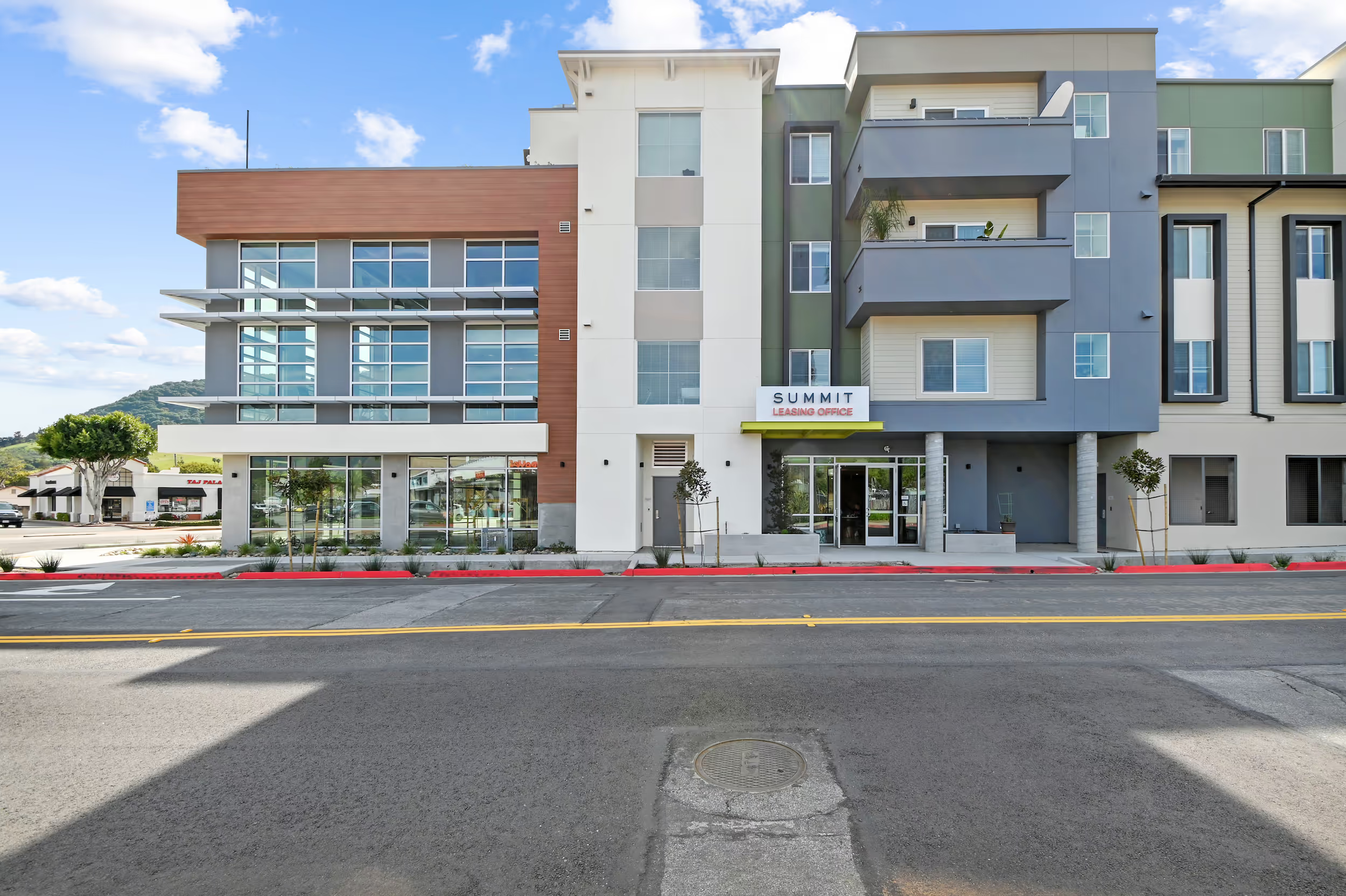
individual lease apartments
Choosing student housing is not only about location, floor plans, or the view from the rooftop. The lease structure can shape your monthly budget, roommate responsibilities, and peace of mind. Individual lease apartments separate your financial obligation from the obligations of the people sharing your home, giving you a clearer path to confident college living.
Key Takeaways
- An individual lease keeps your rent tied to your name alone, so a roommate's missed payment never puts your housing or credit on the line.
- Separate financial obligations mean fewer awkward money conversations, which helps keep roommate relationships friendly all year long.
- With a predictable monthly cost that depends only on you, budgeting for tuition, groceries, and weekend adventures becomes far less stressful.
- Smart renters look past square footage and rooftop views, and treat the lease structure as one of the biggest housing decisions of their college career.
Before you sign, learn how by-the-bed leasing works, what shared spaces mean, and how this structure differs from a joint contract. The right lease can help you move beyond housing uncertainty and reach a higher standard of everyday living.
What Is an Individual Lease? By-the-Bed Leasing, Explained
How an Individual Lease Works: Your Bedroom, Your Contract
With an individual lease, your name appears on a contract tied to your assigned bedroom rather than the entire apartment. The agreement typically states your monthly rent, security deposit, lease dates, payment schedule, maintenance process, and rules for guests, pets, renewal, and subleasing. This structure makes your financial responsibility easier to identify. If your roommates change, your own contract may continue under its original terms, subject to the community’s policies.
Read every provision before signing. Confirm whether the bedroom has a private or shared bathroom, whether utilities have a usage limit, and which furnishings are included. A clear lease should also explain move-in conditions, damages, insurance requirements, and procedures for transferring or ending the agreement.
Will I Have Roommates? How Shared Spaces Fit In
Yes, an individual lease can still place you in a shared apartment. The difference is that you lease your private bedroom while sharing designated common areas. Depending on the floor plan, you may have a private bedroom, a shared bathroom, or a combination of both. Ask to see the exact layout before committing, especially if a listing uses broad terms such as “two-bedroom” for a divided or railroad-style apartment.
Roommate placement may involve your preferred roommates, a matching questionnaire, or an assignment made by the housing community. Ask how preferences are handled, whether roommate requests are guaranteed, and what happens if a resident cancels. Individual lease apartments can offer shared community without making your housing contract dependent on every roommate’s decision.
Individual Lease vs Joint Lease: Which One Protects Your Wallet?
The key difference in a joint lease vs individual lease decision is liability. A joint lease usually makes all residents responsible for the full apartment rent and shared lease obligations. An individual contract generally assigns responsibility to each resident for a specific bedroom and personal payment. Terms vary by property, so the signed agreement controls. Ask direct questions about unpaid rent, replacement tenants, damages, and early termination before choosing your lease type.
The Side-by-Side Comparison: Liability, Flexibility, Cost, Privacy and Roommate Control
| Lease factor | Individual lease | Joint lease |
|---|---|---|
| Rent liability | Usually limited to your contracted bedroom and charges. | May extend to the entire apartment if one resident does not pay. |
| Roommate changes | Often easier to manage through a housing provider’s process. | May require agreement among all leaseholders. |
| Monthly cost | Can cost more because the provider assumes additional leasing risk. | May have a lower per-person rate, with broader financial exposure. |
| Privacy | Depends on the bedroom and bathroom configuration. | Depends on the apartment layout and the group’s arrangement. |
| Roommate control | May include matching or approved roommate requests. | Residents often select one another before signing. |
Individual lease apartments may carry a higher monthly rate than a comparable joint arrangement because the housing provider takes on separate contracts and added turnover risk. Compare the complete housing package, including furniture, utilities, internet, parking, maintenance, and administrative fees, rather than judging rent alone.
What Happens If a Roommate Doesn't Pay Rent? A Real Scenario
This distinction matters when you are searching for student housing near campus and cannot fully assess another resident’s payment habits. Review the default, collections, guarantor, and eviction clauses carefully. A lower advertised rent is not always the lower-risk choice. Clear liability terms can help you protect your budget while still enjoying a social apartment community.
The Real Benefits of Individual Leases for Students
Financial Protection and Predictable, All-Inclusive Rent
For students, an individual lease can create a cleaner boundary between personal finances and roommate finances. Your rent, deposit, and lease obligations are tied to your contract, which may reduce the risk of covering another resident’s unpaid balance. Apartment List reported that 42% of surveyed college students had experienced a roommate paying rent late, making liability more than a technical detail. Read the agreement carefully to confirm how management handles shared damages, utilities, late fees, and missed payments.
Predictability also depends on the full cost, not only the advertised rent. Ask whether furniture, internet, water, electricity, trash service, parking, and maintenance are included. Individual lease apartments can cost more per month than joint arrangements because the provider manages separate contracts and assumes additional turnover risk. The value comes from pairing that price with clear responsibility, fewer surprise expenses, and a payment plan that fits your student budget.
Can I Choose My Roommates? How Roommate Matching Works
Often, yes. Housing communities may let you request friends, submit a roommate group, complete a matching questionnaire, or accept an assignment based on availability. Ask which preferences management can honor and which are requests rather than guarantees. A useful matching process may consider sleep schedules, study habits, cleanliness, guests, communication style, and lifestyle preferences. Share those details honestly. A polished online profile cannot replace a direct conversation about quiet hours, shared groceries, overnight guests, and cleaning responsibilities.
If your preferred roommate changes plans, confirm whether your lease remains valid and how a replacement resident is selected. This is one reason students search for individual lease apartments near me instead of relying on a full group to qualify together. The contract can preserve your place while management addresses the open bedroom through its established process.
Privacy and Personal Space in a Shared Apartment
An individual lease does not automatically mean a private apartment. It usually means a private bedroom within a shared home, with common areas assigned for everyone’s use. Before signing, inspect the exact floor plan and verify bedroom dimensions, door locks, closet space, window placement, bathroom access, and sound separation. Ask whether bedrooms are equal in size and whether any space is divided by a temporary wall. Clear details help you avoid paying for a layout that feels smaller than its listing suggests.
Privacy also comes from the way a community manages daily life. Look for secure building access, maintenance response procedures, guest policies, quiet-hour rules, and study areas away from the living room. With the right floor plan and expectations, you can have a social home base without giving up a retreat for sleep, studying, or a late-night reset.
Honest Pros and Cons: Is an Individual Lease Right for You?
The best choice depends on your budget, preferred level of control, and comfort with shared living. Compare the lease term, total monthly charges, cancellation rules, guarantor requirements, roommate policy, and subleasing provisions before making a decision.
Key Tradeoffs to Weigh
Pros
- Personal rent responsibility is easier to identify.
- Roommate matching may help when you do not have a full group.
- Private bedrooms support sleep, study time, and personal routines.
- All-inclusive terms can simplify monthly budgeting.
Cons
- Monthly rent may be higher than a comparable joint contract.
- You may have limited control over who fills an available bedroom.
- Shared kitchens, bathrooms, and living rooms still require cooperation.
- Utilities, damages, renewal, and transfer rules vary by agreement.
Furnished and Individual-Lease Living at Summit SLO
By-the-Bed Floor Plans: The Bishop, The Cerro, The Madonna, The Osos and The Canyon
At Summit SLO, by-the-bed leasing pairs a personal bedroom contract with the energy of a shared apartment community near Cal Poly. The floor plan names mark distinct ways to shape your college home: The Bishop, The Cerro, The Madonna, The Osos, and The Canyon. Options are available in two-, three-, and four-bedroom configurations, giving you room to choose between a tighter circle and a broader social setup. Review the exact plan before reserving a space, including bedroom placement, bathroom arrangement, storage, windows, and shared living area.
Roommate matching can make the process more approachable when your housing group is still coming together. You can also ask about requesting friends, assignment timing, lease dates, and availability for your preferred configuration. For current rates and specific openings, visit Summit SLO’s floor plans.
Fully Furnished, All-Inclusive Units: What’s Included
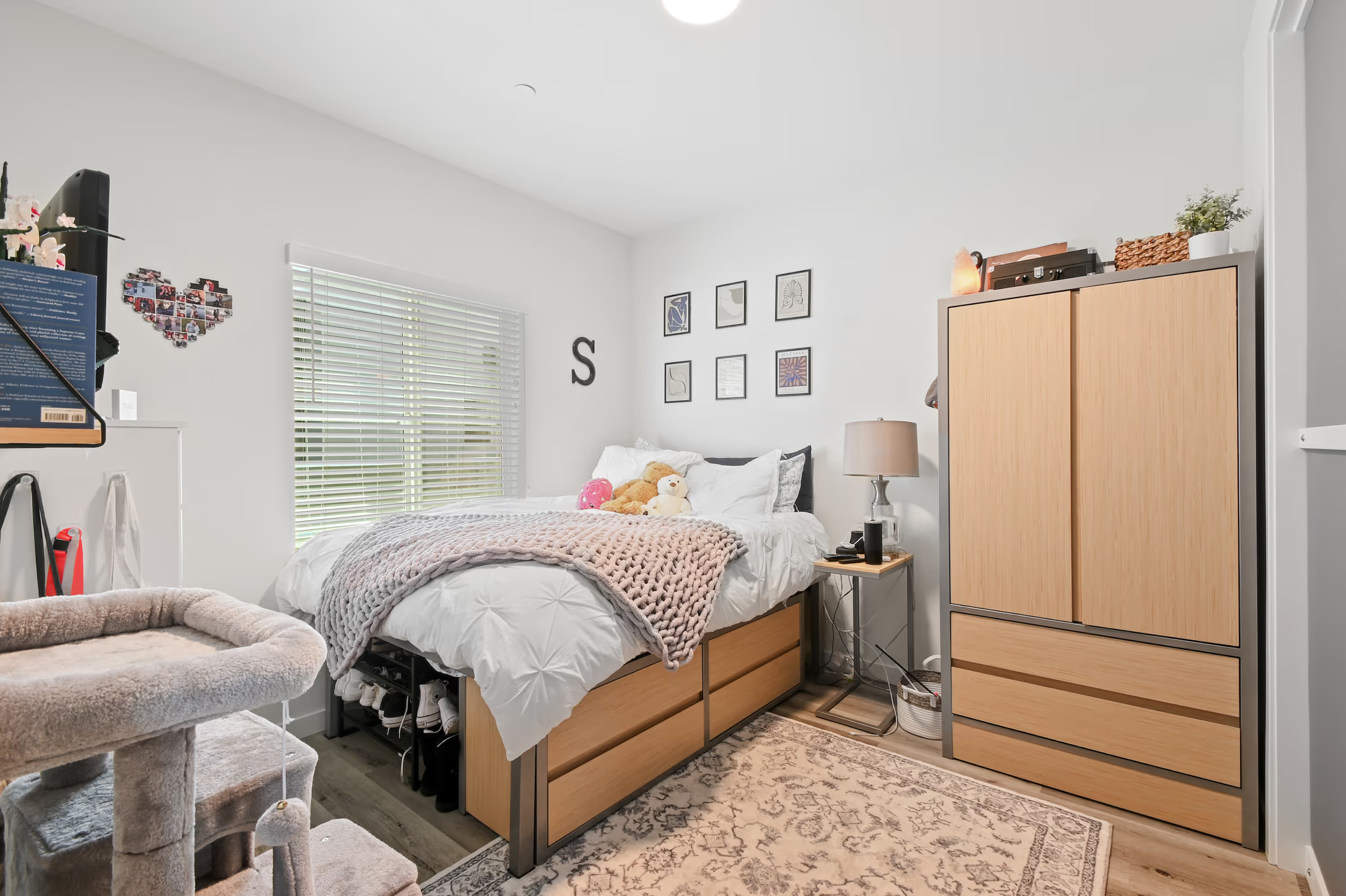
Furnished student housing removes several moving-day decisions from your climb. Instead of sourcing a bed, desk, seating, and dining pieces separately, residents can settle into a finished apartment designed for everyday routines. All-inclusive living may also bring key monthly services into one predictable payment. Confirm the current lease documents for the exact package, utility terms, internet service, parking availability, appliance list, and any usage limits. “Included” should always be defined in writing, especially for electricity and shared services.
- Furnished bedrooms with study-ready essentials
- Shared kitchens and living areas for meals, downtime, and connection
- Community internet and utility terms stated in the lease
- Maintenance support for apartment systems and fixtures
- Roommate-oriented layouts in two-, three-, and four-bedroom plans
Resort-Like Amenities Steps from Cal Poly
Where you live shapes the space between classes, club meetings, workouts, and late study sessions. Summit SLO brings that experience above basic student housing with a rooftop lounge for sunset conversations, 24/7 fitness access for flexible training, and dedicated study spaces when your apartment is too social for focus. These amenities turn ordinary transitions into a more connected routine, whether you are reviewing notes before class or decompressing with friends after a long day.
The setting near Cal Poly adds practical value to the lifestyle. A location close to campus can simplify your morning route, reduce dependence on a car, and keep you near the people and activities that define your college experience. Change your altitude with a home that supports privacy, convenience, community, and momentum in the same address.
How to Find Individual Lease Apartments Near You
Finding the right by-the-bed rental takes more than typing “individual lease apartments near me” into a search bar. Your goal is a home that matches your campus route, budget, privacy needs, and lease expectations. Start with a short list of housing communities, then verify the details that glossy photos cannot show: the actual bedroom dimensions, utility limits, roommate process, maintenance response, security features, and total monthly cost. A careful search helps you rise above rushed decisions and avoid paying premium rent for thin walls, poor upkeep, or a misleading floor plan.
Step-by-Step: Filtering Your Search Like a Pro
- Set your location range. Map your walking, biking, driving, or transit route to campus. A property that appears close online may feel very different during an early class or evening activity.
- Define your apartment requirements. Decide whether you need a private bedroom, private bathroom, furnished furniture, in-unit laundry, parking, air conditioning, study space, or accessible features. Separate must-haves from amenities that would be nice to have.
- Calculate the full monthly obligation. Add base rent, utilities, internet, parking, renter’s insurance, deposits, application fees, and recurring service charges. Ask whether electricity has a cap and how overages are divided.
- Inspect the exact floor plan. Confirm that every advertised bedroom has a door, window, closet, and reasonable access to a bathroom. Watch for railroad layouts, converted dining areas, temporary partitions, and unequal bedroom sizes.
- Review the lease before applying. Look for payment deadlines, guarantor requirements, renewal terms, guest rules, sublease restrictions, early termination language, and policies for roommate changes.
- Visit or request a live tour. Notice hallway noise, natural light, building access, cleanliness, elevator condition, kitchen storage, and the distance between bedrooms and shared living areas. A video tour should show the specific unit type, not only staged amenity spaces.
Checklist: What to Verify Before You Sign
Use written answers, not verbal assurances, when you compare housing options. A leasing professional should be able to explain which services are included, which charges can change, and how the community handles maintenance and resident concerns. If a listing is vague about a fee, room assignment, or utility allowance, pause before submitting a deposit. Clarity at the start can protect your budget and your move-in experience later.
- Lease structure: Is your contract tied to one bedroom, and does it state your personal rent responsibility?
- Furnishings: Are the bed, mattress, desk, chair, dresser, sofa, dining pieces, and appliances included?
- Utilities: Which services are covered, what usage limits apply, and how are shared overages calculated?
- Roommate placement: Can you request friends, complete a matching profile, or approve a replacement resident?
- Privacy: Does the bedroom have a locking door, sufficient storage, a window, and the bathroom access shown in the listing?
- Subleasing: Is subletting permitted, who must approve it, and do you remain responsible until a replacement signs?
- Condition and repairs: How do you document move-in damage, submit service requests, and escalate unresolved problems?
- Move-out terms: What notice is required, how is the security deposit handled, and which cleaning charges may apply?
Searches such as “joint lease apartments near me,” “individual lease apartments near California,” or “individual lease apartments near Texas” can produce broad results, but location alone does not establish quality or fit. Use the same checklist for every property, save the lease version you reviewed, and keep written responses from management. That disciplined approach gives you a clearer route to a well-matched home, with fewer surprises after you reach move-in day. Learn about potential rental assistance resources if affordability is a concern.
References
Cornell Law School, Lease: https://www.law.cornell.edu/wex/lease
USA.gov, Tenant rights: https://www.usa.gov/tenant-rights
U.S. Department of Housing and Urban Development, Rental assistance: https://www.hud.gov/topics/rental_assistance
Frequently Asked Questions
What does 'individual lease' mean when apartment hunting?
An individual lease, also called a by-the-bed lease, is a contract that covers one resident and one bedroom within a shared apartment. You owe only your own rent and follow your own lease terms, while the kitchen, living room, and bathrooms function as shared common areas. That separation keeps your budget on track even if your roommates change.
What are individual apartments called?
Individual lease apartments are commonly called by-the-bed or per-bed housing, terms you will see across student housing communities near campus. Both names point to the same idea: each resident signs a contract tied to a specific bedroom rather than the entire unit. Knowing the lingo makes comparing listings far less confusing.
Can I afford $1000 rent making $20 an hour?
Yes, $1,000 rent is generally manageable on $20 an hour with full-time hours, since that pay rate equals roughly $3,460 per month before taxes. The classic 30% guideline caps housing near $1,040, so you would sit right at the edge of that line. Building in a buffer for utilities, groceries, and savings is the smarter move.
What salary do you need to afford $1200 rent?
A salary of about $48,000 per year, or $4,000 per month, is the standard benchmark for affording $1,200 rent under the 30% rule. That guideline keeps housing from crowding out tuition, groceries, and your social life. If your income falls short, a by-the-bed lease can shrink your personal share while limiting your financial exposure.
How much can I spend on rent if I make $2000 a month?
About $600 per month is the recommended rent ceiling on a $2,000 income under the 30% guideline. That number feels tight in most college markets, which is exactly why by-the-bed leasing appeals to students: you pay for one bedroom within a shared apartment instead of an entire unit. Always price in utilities and fees before signing anything.
Why do individual lease apartments sometimes cost more than joint leases?
Individual lease apartments can carry a higher monthly rate because the housing provider absorbs added risk by managing separate contracts and resident turnover. The payoff is financial protection: your obligation stays tied to your own bedroom, not a roommate's unpaid balance. Compare the full package, including furniture, utilities, internet, and maintenance, before judging the sticker price alone.
Is an individual lease a good choice for first-year college students?
An individual lease is a smart choice for first-year students because it keeps rent, deposits, and lease terms tied to your own bedroom rather than a group contract. Roommate matching questionnaires can pair you with compatible residents, and your housing can stay secure even if someone else cancels. Just confirm the bathroom setup and any utility limits before you sign.
.avif)