SLO finals study guide
Finals week gets easier when you replace guesswork with a visible plan. This SLO finals study guide shows how to read Cal Poly’s exam matrix, protect your best focus hours, and build a schedule that includes sleep, meals, and recovery. Every exam needs a block, and every study block needs a purpose.
Key Takeaways
- Start your prep by pulling Cal Poly's official exam schedule so every final gets a confirmed date before you build anything else.
- Time-blocking delivers the biggest payoff when you match your hardest subjects to the hours when your concentration naturally peaks.
- Sleep, real meals, and short recovery breaks belong in your calendar as fixed commitments, not leftovers you squeeze in if time allows.
- Assign a single clear purpose to each study block so every session produces measurable progress toward exam day.
- A visible plan transforms finals week from a stressful scramble into a sequence of manageable wins you can actually control.
Confirm official exam times before assigning review sessions. Treat preparation like a professional workday, with focused hours, planned breaks, and a firm stopping point. The goal is to arrive prepared, steady, and ready to perform.
Decode Your Cal Poly SLO Final Exam Schedule
Cal Poly assigns finals according to the meeting pattern and starting time listed for each class, not simply the day on which your class meets. The Office of the Registrar publishes the official final exam schedule and matrix. Match each course’s meeting days and start time to the corresponding exam block, then record the date, time, and location in one calendar. Cal Poly finals can run across five daily blocks, with the earliest beginning at 7:00 AM, so check every course before planning your study week.
How Class Meeting Times Map to Exam Blocks
Your class schedule is the key to the matrix. Read the meeting days first, then identify the scheduled start time. A Monday-Wednesday-Friday course may map to a different final block than a Tuesday-Thursday course, even when both begin at a similar hour. Use the exact start time shown in your student schedule rather than a label such as “morning” or “afternoon.”
| Schedule detail | What to match | What to record |
|---|---|---|
| Meeting days | Official day-pattern row | Assigned exam date |
| Class start time | Closest exact time block | Exam start and end time |
| Course section | Instructor or section details | Room, building, or delivery format |
Step-by-Step: Find Your Exams in the Official Matrix
- Open the current final exam schedule from the Cal Poly Office of the Registrar.
- Write each course code, meeting days, and start time on one tracking sheet.
- Locate the matching day pattern in the matrix.
- Follow that row to the time block assigned to your course.
- Verify the final date, start time, location, and instructor instructions in Canvas or the course syllabus.
- Enter each exam into your calendar with travel time and a reminder the previous evening.
Do not rely on a friend’s schedule or an old screenshot. Room assignments, special sections, and instructor directions can vary. A five-minute verification can prevent an exam-morning scramble.
What to Do When You Have a Schedule Conflict
If two finals overlap, or the assigned sequence creates an unreasonable conflict, document the issue immediately. Save the relevant matrix entry, list both course sections, and contact the instructors or department offices through Cal Poly’s stated process. Ask about the approved conflict-resolution procedure instead of arranging an informal swap. Keep written confirmation of any adjustment, including the new time, room, and required identification.
Mark both possible windows while the issue is reviewed, protect transportation time, and avoid a large study block in the disputed period. After the university confirms the solution, update your calendar and share the final details with anyone helping you prepare.
The 9-to-5 Finals Protocol: A Daily Time-Blocking Blueprint
Why Treating Finals Like a Workday Prevents Burnout
A workday model gives studying a start time, an end time, and measurable priorities. Decide which chapters, problem sets, flashcards, or practice exams belong in each block instead of carrying vague guilt from breakfast through midnight. Use 50 minutes of focused work followed by a 10-minute break. Research findings cited in the brief indicate that this pattern can reduce mental fatigue by 30%, helping preserve attention across finals week.
Keep the finish line firm when your exam schedule allows. Ending by dinner protects sleep, gives your brain time to consolidate learning, and creates space for a meal or short walk. High performance comes from using your clearest hours well, not staying awake longest.
Sample Hour-by-Hour Schedule for a 2-Exam Day
Adjust the times to match your exams, commute, and meals. This sample assumes a morning exam followed by an afternoon exam, with focused review completed before the evening.
| Time | Plan |
|---|---|
| 7:00-8:00 AM | Breakfast, materials check, and brief recall review |
| 8:00-10:00 AM | Exam 1, arrival buffer included |
| 10:00-11:00 AM | Snack, walk, and mental reset |
| 11:00 AM-1:00 PM | Exam 2 preparation using practice questions |
| 1:00-2:00 PM | Lunch and screen-free recovery |
| 2:00-4:00 PM | Exam 2, with travel time protected |
| 4:00-6:00 PM | Light review for the next exam, then stop |
How to Adjust the Protocol for Evening Exams or Multiple Back-to-Back Tests
For an evening exam, shift difficult preparation earlier rather than studying until the scheduled start. Use the morning for difficult problems, early afternoon for timed practice, and the final hour for formulas, definitions, and logistics. Eat a familiar meal several hours before testing and leave enough time to reach the room calmly.
When exams fall back to back, give each course a minimum viable review plan. Protect a short reset between tests, then focus only on the next subject. Do not spend the break analyzing the completed exam.
- Confirm exam rooms and permitted materials the night before.
- Pack chargers, pencils, identification, water, and a planned snack.
- Assign every study block one outcome, such as completing 20 problems.
- Keep breaks away from social media when possible.
- Stop intensive studying early enough to preserve a full night of sleep.
Active Study Strategies That Actually Stick
A strong SLO finals study guide should show how to make information retrievable under exam pressure. Active recall, practice testing, error review, and spaced repetition turn study time into performance training. Research findings cited in the brief indicate that retrieval practice and practice tests can improve long-term retention by up to 50% compared with passive rereading. Spend less time looking at information and more time producing it without help.
Practice Tests vs. Re-Reading: Why Active Recall Wins
Rereading notes can create familiarity, but familiarity is not recall. Practice questions expose gaps, require decisions, and train retrieval of definitions, formulas, concepts, and processes. Briefly review the relevant lecture material, close your notes, and answer questions from memory. Mark each response correct, incomplete, or incorrect. Target missed material in the next block instead of repeating content you know.
| Method | Best use | Common limitation |
|---|---|---|
| Rereading notes | Refreshing vocabulary, examples, and class structure | Can feel productive without confirming recall |
| Flashcards | Testing terms, steps, equations, and short explanations | Weak cards may reward recognition instead of retrieval |
| Practice tests | Building exam stamina and locating knowledge gaps | Requires careful review after each attempt |
| Teach-back method | Explaining complex ideas in clear, connected language | Can hide gaps unless you verify each claim afterward |
Building a Spaced Repetition Plan in 10 Minutes
Spaced repetition revisits material at increasing intervals instead of reviewing everything in one sitting. Create three columns: “today,” “next review,” and “needs work.” Sort topics by recall performance. Confident topics move to a later review; uncertain topics return sooner. A simple sequence can include a same-day check, next-day retrieval, and another review several days later. Place sessions before the exam and pair them with questions, blank-page recall, or a short explanation.
Step-by-Step Revision Workflow for One Course
Use this workflow when a course feels too broad:
- Map the course: List units, learning objectives, labs, readings, formulas, and major assignments.
- Rank the material: Mark each topic strong, uncertain, or weak based on recent quiz and homework performance.
- Build a question bank: Turn headings and learning objectives into questions requiring an explanation, calculation, comparison, or application.
- Run a closed-note attempt: Complete a practice set without examples or lecture slides.
- Analyze errors: Record whether each miss came from a forgotten definition, calculation step, misread prompt, or weak concept link.
- Repair and retest: Review related material, explain it aloud, and answer a fresh question without assistance.
- Schedule the next retrieval: Add missed topics to the next block and stronger topics to a later spaced review.
A 50-minute sprint can hold one closed-note practice set, error analysis, and a short retest, followed by a 10-minute break. The goal is not to complete every page; it is to make knowledge available when the exam asks for it.
Your SLO Study Sanctuary: Where to Focus When the Library Is Packed
The right study environment removes decisions that drain attention. When the library is full, choose a location based on the task: quiet reading, timed problem sets, group discussion, or long revision. Look for a comfortable seat, reliable internet, accessible outlets, controlled noise, and a clear departure time.
On-Campus Quiet Zones That Actually Stay Quiet
Try less-trafficked academic buildings and department areas during class hours. Upper floors, small study rooms, and spaces away from major walkways may offer steadier concentration than central areas. Check posted policies, especially when a room is reserved for instruction or group work. Silence phone notifications, bring headphones without relying on audio, and avoid seats beside doors or busy corridors. A useful campus location should also provide access to needed supplies.
Off-Campus Coffee Spots with Outlets and Wi-Fi
San Luis Obispo coffee shops can suit flashcards, reading, and lighter writing. Visit during a quieter window, confirm that studying is welcome, and purchase something before claiming a table. Check outlets, noise, Wi-Fi, and expected seating time first. Cafes are less suitable for confidential group conversations or timed exams because background sound, limited seating, and foot traffic can interrupt concentration.
| Study environment | Best for | Check first |
|---|---|---|
| Campus quiet area | Deep reading and individual problem solving | Noise policy, seating, and building hours |
| Coffee shop | Flashcards, writing, and short review sessions | Outlets, Wi-Fi, table availability, and foot traffic |
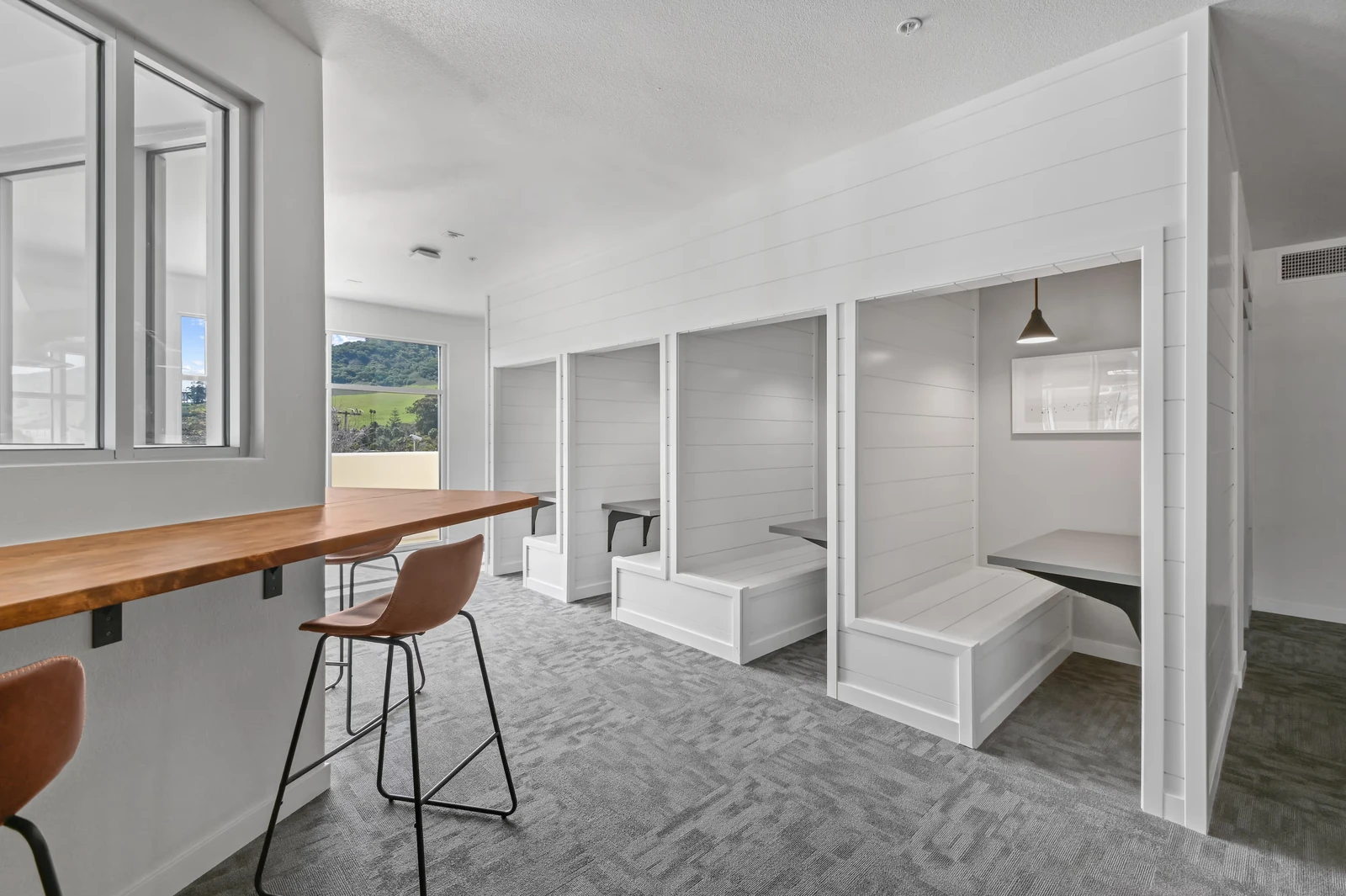
| Private study lounge at Summit SLO | Planned revision blocks and focused exam preparation | Access rules, available seating, and your required materials |
The Ultimate Distraction-Free Environment: Private Study Lounges at Summit SLO
A dedicated private study lounge gives your finals routine a dependable home base. At Summit SLO, students can separate academic time from a bedroom, busy cafe, or crowded public table. Set up your laptop, course packet, water, calculator, and question bank, then enter with a defined target such as one practice set or two weak topics. The setting supports a transition into work mode while the nearby student community keeps the experience connected.
Finals Wellness: Managing Stress, Sleep, and Nutrition in SLO
Preparation includes notes and practice questions as well as your nervous system, sleep schedule, and meals. During finals week, treat wellness as part of your academic plan. Small routines can steady energy and help you reach the finish without crashing.
Quick Stress-Busting Techniques for Exam Morning
Before leaving or entering the classroom, breathe in for four counts, pause briefly, and exhale for six counts while relaxing your shoulders. Repeat several times. Then name five things you see, four you feel, three you hear, two you smell, and one you taste. This redirects attention to the present. Arrive early enough to locate the room, use the restroom, and settle your materials. If panic symptoms feel severe, persistent, or unsafe, contact campus counseling or a medical professional.
The Sleep Bank: How to Protect Your Rest Before Finals Week
You cannot store extra sleep like money, but you can protect a consistent sleep window before finals. Move away from late-night cramming several days early, keep your wake time steady, dim bright screens before bed, and place clothes and exam materials beside the door. Stop intensive studying at a defined hour, then use a shower, light stretching, or quiet reading to signal recovery. For a late exam, preserve enough morning time for breakfast and calm review rather than sacrificing a full rest cycle.
Brain Fuel in SLO: Easy, Healthy Eats Near Campus and Downtown
Choose familiar meals combining carbohydrates with protein, fiber, and fluids. Oatmeal with fruit and nuts, yogurt with granola, or eggs with toast can feel steadier than coffee alone. Near campus or downtown, portable choices include a rice bowl, turkey sandwich, bean-and-cheese burrito, soup with bread, or salad paired with protein. Carry water and a banana, trail mix, or granola bar. Do not test a new supplement or oversized caffeine dose on exam morning.
- Pack identification, permitted supplies, water, and a familiar snack.
- Complete a brief breathing exercise before entering the exam room.
- Eat a balanced meal instead of skipping food during a long study day.
- Set a firm bedtime and prepare materials before winding down.
- Reach out for professional support if anxiety disrupts daily functioning or feels unmanageable.
Frequently Asked Questions
Is 2 days enough to study for finals?
An SLO finals study guide can help you prepare in two days if you focus on high-value topics and active practice. Start by listing each exam’s tested material, then schedule timed problem sets, practice questions, and error review. Protect sleep, meals, travel time, and short breaks so your final review stays focused.
What is the best way to study for finals?
The best way to study for finals is to use active recall, practice testing, spaced review, and error correction. An SLO finals study guide works best when every block has one outcome, such as completing 20 problems or explaining a chapter from memory. Use passive rereading only as a quick follow-up.
How can I get a 100 on a final exam?
An SLO finals study guide cannot guarantee a 100, but targeted practice gives you the strongest preparation. Review the official course materials, complete representative problems without notes, track missed concepts, and retest those areas. Confirm the exam time and location, arrive prepared, and get a full night of sleep.
How should I prepare for a final exam?
An SLO finals study guide recommends preparing by confirming the official exam details, organizing tested topics, and assigning each study block a clear task. Use practice questions and active recall instead of relying on rereading. Pack identification and permitted materials the night before, then leave room for meals, breaks, transportation, and sleep.
What is the 3-2-1 rule for studying?
The 3-2-1 study rule can mean three key topics, two focused review sessions, and one final check before an exam. An SLO finals study guide can use this structure to turn a short study window into a clear plan. Adapt the numbers to your course, then prioritize practice and unresolved mistakes.