SLO student wellness
College wellness includes knowing where to seek care, building routines that protect your energy, and creating a home base where recovery feels possible. In San Luis Obispo, housing costs, academic pressure, and limited local appointments can compete for your attention.
This guide offers a route from first symptoms to appropriate support. Use it to organize health information, recognize when stress needs attention, and move through Cal Poly and SLO with steadier footing. That is the foundation of SLO student wellness: care for your body, mind, schedule, and sense of belonging.
Elevate Your Well-being: A Holistic SLO Student Guide
Start with Cal Poly Campus Health & Wellbeing for routine medical questions, counseling access, and local referrals. Keep the medical hotline, CAPS hotline, insurance card, medication list, and emergency contacts available. Build daily supports around sleep, meals, movement, social connection, and a quiet place to reset. A strong wellness plan provides dependable steps before pressure reaches its peak.
Welcome to The Summit: Your Path to Peak Performance
College brings changing demands: a packed course schedule, a new apartment, financial strain, and shifting friendships can affect your stamina. Peak performance is not constant productivity. It means having enough physical energy, emotional steadiness, restorative sleep, and practical support to meet demanding weeks without losing your footing.
San Luis Obispo offers campus services, walkable neighborhoods, and outdoor spaces that can support this effort. The goal is a repeatable system that helps you notice warning signs early, ask for assistance without shame, and keep small problems from becoming major barriers.
Understanding SLO Student Wellness: Beyond Academics
SLO student wellness reaches beyond grades and study hours. It includes preventive care, mental health counseling, nutrition, exercise, personal safety, housing quality, financial stress, and meaningful relationships. More than 60 percent of college students report overwhelming anxiety or academic burnout during their degree programs, according to the research brief for this guide. Regular check-ins and early support are practical tools, not signs of failure.
Ask whether you sleep consistently, eat enough for long labs or work shifts, have someone to call after a difficult day, and live somewhere quiet enough for concentration. These questions reveal needs that a calendar or transcript cannot show.
How This Guide Helps You Thrive
This roadmap connects campus care with everyday decisions in SLO. It covers health services, urgent concerns, emotional bandwidth, activity, nourishing habits, and a residence that supports focus. Read it straight through for a full reset, or use a section when a specific need reaches your trailhead.
Navigating SLO's Health & Care Network
Cal Poly Campus Health & Wellbeing: Your First Line of Defense
Cal Poly Campus Health & Wellbeing is a natural starting point for routine medical concerns, health guidance, and counseling. Before an appointment, prepare student identification, insurance details, current medications, allergies, a symptom timeline, and your preferred pharmacy. Ask about follow-up care, referrals, testing, and what to do if symptoms change.
Cal Poly lists 24/7 medical support at 805-756-1211 and 24/7 CAPS support at 805-756-2511. The medical line can direct health questions, while the CAPS line is appropriate for emotional distress and mental health support. Save both contacts before you need them, and tell a trusted roommate or friend where they are stored.
Accessing Care: Beyond Campus Clinics
San Luis Obispo County has a limited primary care supply, so finding a doctor who accepts new patients may take time. Search before illness interrupts the semester. Contact your insurance provider for an in-network directory, call offices to confirm availability, and ask about waitlists, nurse consultations, or provider recommendations. A community clinic, student health referral, or established telehealth service may bridge the gap while you seek ongoing primary care.
Conquering the SLO Healthcare Shortage: Urgent Care & Telehealth Strategies
Urgent care suits needs requiring prompt attention but not life-threatening care, including minor injuries, infections, or a sudden fever. Check hours, accepted insurance, appointment procedures, and transportation before traveling. Telehealth may help with follow-up questions, medication discussions, or conditions appropriate for a virtual visit. It cannot replace hands-on evaluation when symptoms are severe, rapidly worsening, or difficult to describe remotely.
Emergency Preparedness: Knowing Who to Call
Call 911 for immediate danger, severe breathing trouble, chest pain, serious injury, suspected overdose, or thoughts of immediate self-harm. Give the dispatcher your exact location, including residence name, building, room number, and a nearby landmark. For urgent emotional support that is not an immediate emergency, use the CAPS hotline at 805-756-2511. Reaching out early can create a safer next step when decision-making feels difficult.
Store contacts in your phone, place insurance information in a secure folder, and review the plan at the beginning of each quarter. These basics make informed choices easier when the climb gets demanding.
Cultivating Peak Mental & Emotional Health
Your Mental Sanctuary: Building Resilience
SLO student wellness includes recovering after a difficult exam, disappointing conversation, or demanding week. Resilience is recognizing your signals, naming the problem, and choosing a next step before stress takes over. Use a brief daily check-in for energy, mood, sleep, and connection. A shift lasting several days deserves attention from a counselor, medical provider, trusted friend, or family member.
Build a support map before you need it. List people who can listen, places where you feel settled, activities that calm your nervous system, and professional campus resources. Keep actions specific: “text my roommate after class” or “schedule counseling before Friday.” Such steps offer direction when anxiety, loneliness, depression, or homesickness makes decisions difficult.
Strategies for Managing Stress & Preventing Burnout
Burnout can develop when academic demands stay high while sleep, meals, movement, and social contact shrink. More than 60 percent of college students report overwhelming anxiety or academic burnout during their degree programs, according to the research brief for this guide. Use a weekly workload scan: mark fixed commitments, divide major assignments, and reserve recovery time like a lab or lecture.
Finding Your Community: Connection in San Luis Obispo
Social support can buffer isolation, but friendship usually requires repeated contact. Choose a weekly setting such as a club, intramural team, volunteer shift, residence event, faith community, or study group. Arrive early, learn names, and suggest a low-pressure follow-up such as coffee, a walk, or a shared review session.
San Luis Obispo also offers farmers markets, group hikes, and casual downtown meals. If social anxiety makes participation difficult, set a smaller goal: stay for twenty minutes, speak with one person, or invite a classmate to walk between buildings. Belonging is built through manageable steps.
Mindfulness and Self-Care Practices for a Balanced Life
Try a two-minute breathing exercise before opening your laptop, a phone-free meal, progressive muscle relaxation before sleep, or a journal entry separating facts from worries. These habits create pauses between a stressful event and your response. They do not replace counseling or medical treatment, but they can support emotional regulation throughout a demanding quarter.
Create a reset routine for difficult days: drink water, eat something substantial, step outside, contact one person, and decide whether professional support is needed. Cal Poly students can use the campus mental health support pathway when distress feels difficult to manage. Caring for your mind supports learning, relationships, and daily life.
Fueling Your Body: Nutrition, Fitness & Outdoor Adventures
The SLO Lifestyle: Embracing Active Living
Physical activity gives your week rhythm when lectures and assignments keep you seated. Walk to class, take stairs, stretch between study blocks, or schedule a ten-minute evening loop. These choices support circulation, mobility, energy, and stress relief without requiring an intense training plan.
Pair movement with an existing habit, such as walking after lunch or stretching while reviewing flashcards. Bring water, use sun protection, and adjust plans for heat, poor air quality, or low visibility. A sustainable routine should leave you more capable, not depleted.
Peak Fitness: On-Campus and Local Gyms
Cal Poly recreation facilities support strength training, cardio, group exercise, and recreational sports. Local studios and gyms may offer different schedules or specialized instruction. Check hours, student access, equipment, class registration, transportation, and cancellation terms. Choose an option you can reach consistently.
Build sessions with a warm-up, moderate cardio, resistance work, and mobility. New exercisers can ask staff about equipment orientation or begin with bodyweight movements. Stop for sharp pain, dizziness, or unusual shortness of breath, and seek medical guidance when symptoms concern you. Fitness should support sleep, concentration, posture, and confidence.
Exploring San Luis Obispo's Natural Playground: Trails and Beaches
Outdoor recreation is an accessible way to reset in SLO. Bishop Peak and Madonna Mountain offer hiking routes, while nearby beaches provide space for walking, cycling, or quiet time near the water. Check trail conditions, bring a charged phone, carry water, and tell someone your route when hiking alone. Match distance and elevation to your experience, then increase gradually.
- Bishop Peak: A rewarding hiking destination for students who want a purposeful climb and broad views.
- Madonna Mountain: A local option for an outdoor break, with route selection based on time and ability.
- Downtown farmers markets: A walkable outing that combines fresh food, community activity, and a change of scenery.
- Nearby beaches: Useful for shoreline walks, reflective downtime, and low-impact movement when conditions are suitable.
Nourishing Your Body: Smart Eating Habits for Students
Steady nutrition supports attention, recovery, immune function, and mood. Keep staples such as oats, eggs, beans, rice, frozen vegetables, fruit, yogurt, nuts, and whole-grain bread. Build meals around protein, fiber, carbohydrates, and healthy fats, with snacks for long class days. Plan two or three dependable meals before attempting an elaborate menu.
Financial pressure can make food decisions harder in San Luis Obispo, a city recognized among the least affordable small cities relative to local wages. Create a weekly food budget, compare unit prices, use campus meal resources when eligible, and cook larger portions for leftovers. Eating enough is a wellness practice. When nutrition, movement, and outdoor time work together, SLO student wellness supports clearer focus and greater stamina.
Your Living Space as a Wellness Hub
Beyond Dorm Life: Elevating Your Home Environment
Your home base is a daily part of SLO student wellness. Noise, limited storage, poor lighting, or an unreliable study area can drain attention before class. An organized apartment can separate work from rest, support food preparation, provide privacy, and keep essential routines within reach. In an expensive rental market, assess monthly cost alongside sleep quality, commute time, concentration, social connection, and the effort required for daily tasks.
The Summit SLO Advantage: Creating Your Personal Sanctuary
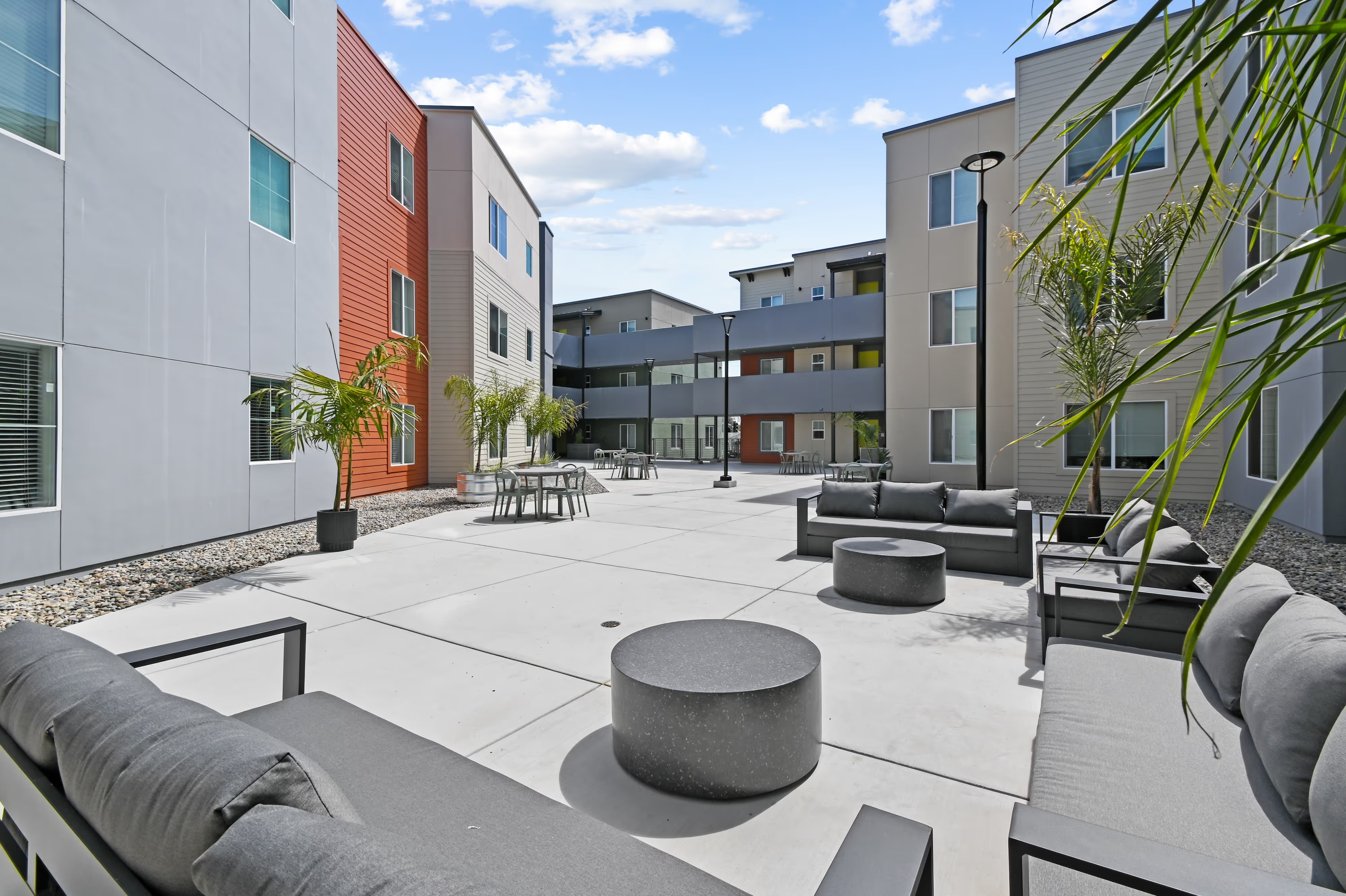
Summit SLO is designed around student housing that supports the whole climb, not merely a bed. A personal bedroom provides separation when you need quiet, while shared community areas offer opportunities to connect without leaving home. You can join a conversation or event, then return to a space arranged for sleep and restoration. A good residence helps you move between ambition, recovery, and belonging with less friction.
| Living feature | Wellness and academic value | What to assess before choosing |
|---|---|---|
| Private sleeping space | Supports consistent rest and personal decompression. | Check noise levels, natural light, ventilation, and storage. |
| Dedicated study area | Creates a reliable cue for concentration and assignment completion. | Look for outlets, desk space, ergonomic seating, and dependable internet. |
| Shared social spaces | Encourages connection and reduces isolation during busy weeks. | Consider seating, accessibility, operating hours, and community programming. |
| Fitness and outdoor access | Makes movement easier to fit into a demanding schedule. | Review equipment, nearby sidewalks, bike storage, and route safety. |
Designing for Focus: Study Spaces That Inspire
Build a study zone that signals focus without making your bedroom feel like an office. Keep course materials together, position your screen to reduce glare, and use a task light during evening work. Put your phone across the room during focus blocks, then take breaks away from the desk. A clean surface, comfortable chair, and visible weekly planner reduce decisions when deadlines stack up.
Amenities That Support Your Well-being Journey
Amenities matter when they remove barriers to healthy behavior. A rooftop lounge offers a change of scenery, a shared kitchen makes regular meals practical, and convenient fitness access can turn a short break into movement. Prioritize features you will use repeatedly. Your residence should be a launch point for campus life, a calm place to land, and a higher standard for everyday student living.
Frequently Asked Questions
Is Cal Poly SLO more conservative or liberal?
Cal Poly SLO includes students and organizations with a range of political views, so the campus is not defined by one label. Students can explore different perspectives through clubs, events, classroom conversations, and civic programs. SLO student wellness also benefits from respectful connections and a sense of belonging across differences.
What does student wellness mean at Cal Poly SLO?
Student wellness means caring for physical health, mental health, sleep, nutrition, relationships, safety, finances, and housing. SLO student wellness works best as a repeatable routine that protects energy during demanding quarters. Small habits, early support, and a comfortable home base can help students stay grounded and ready for campus life.
Does the Cal Poly Health Center take walk-ins?
Cal Poly Campus Health & Wellbeing may offer same-day or walk-in guidance depending on the concern, staffing, and current procedures, so students should confirm before visiting. Cal Poly students can call 805-756-1211 for medical support, prepare insurance and medication details, and ask about appointments, referrals, or follow-up care.
What celebrities went to Cal Poly SLO?
Cal Poly SLO has notable alumni in entertainment, business, sports, and public life, though the university is best known for its hands-on academic programs. Students exploring campus connections can check official alumni sources for current names and details. SLO student wellness also includes finding communities that make college feel more connected.
Who is the most famous person from San Luis Obispo?
San Luis Obispo does not have one universally agreed-upon most famous person, since recognition depends on the field and audience. Local and regional figures may be known for entertainment, business, sports, or public service. Students can enjoy SLO as a place where community, outdoor time, and campus life support wellness.
How can Cal Poly students prepare for health care in SLO?
Cal Poly students can prepare by saving the medical hotline at 805-756-1211, checking insurance networks, and identifying a nearby urgent care option. Keeping a medication list, allergy details, pharmacy information, and emergency contacts in one secure place makes care decisions easier when the quarter gets busy.
When should a Cal Poly student call 911 instead of seeking routine care?
Cal Poly students should call 911 for immediate danger, severe breathing trouble, chest pain, serious injury, suspected overdose, or thoughts of immediate self-harm. Give the dispatcher the exact residence, building, room, and nearby landmark. For urgent emotional support without immediate danger, call the CAPS hotline at 805-756-2511.