SLO bike commuting
For students moving between Cal Poly, downtown, and nearby neighborhoods, SLO bike commuting can make daily travel faster and more flexible. The right route reduces traffic and parking stress while keeping coffee shops, study spots, groceries, and campus destinations accessible.
Key Takeaways
- Choosing the right bike route in San Luis Obispo cuts down on traffic headaches and makes parking a non-issue, so you can focus on getting to class or your favorite coffee spot.
- Gearing up with the right safety equipment and a reliable lock keeps your commute smooth and your bike secure, whether you're heading to campus or downtown.
- Mapping your path ahead of time turns daily travel into a predictable, stress-free part of your routine, letting you enjoy more of what SLO has to offer.
- Mastering local bike lanes and shared paths gives you the confidence to navigate between Cal Poly and nearby neighborhoods without delays.
This guide covers route planning, local riding rules, safety, gear, storage, and transit connections. Use it to choose corridors, manage hills, and build a car-free routine.
Elevate Your Commute: Your Peak Guide to SLO Bike Life
Welcome to the Summit: Why Bike Commuting in SLO Is Your Next Move
San Luis Obispo is compact enough for bicycle travel. A ride to class can provide a morning reset, while an evening trip downtown avoids parking concerns. Bike commuting also reduces fuel, insurance, maintenance, and parking costs. According to Rideshare.org, commuting by bike can save riders up to approximately $3,300 per year compared with driving and maintaining a car.
Plan around elevation, signals, crowded campus paths, and your preferred stress level. A flat trail may suit a daily class schedule, while a direct arterial may work when time is limited.
The Cal Poly Connection: Navigating the Core Student Corridors
Cal Poly-bound riders commonly approach from downtown, the Railroad District, Broad Street neighborhoods, and residential areas south of campus. Campus edges can shift quickly from open road to pedestrian-heavy paths. Identify your building first, then choose the nearest legal bicycle entrance, rack, or storage point.
Foothill Boulevard offers a direct east-west connection near the university. Highland Drive serves riders approaching from the north and east, while Chorro Street connects central neighborhoods with downtown and northern routes. Compare traffic speed, lane width, turning movements, and grade. Students carrying backpacks may prefer a calmer street with one extra block over a stressful merge.
Beyond the Campus Gates: Connecting Neighborhoods to Downtown and Beyond
Residential riders can connect local streets to the Railroad Safety Trail, downtown commercial blocks, and the Cal Poly perimeter. From the south, work toward downtown through neighborhood streets before joining a northbound connection. From the east, choose Chorro Street or Foothill Boulevard according to your destination and traffic comfort. From the north, use Highland-area connections while watching grades and busy intersections.
Class trips favor predictable travel time and secure parking. Grocery trips may favor slower streets with convenient stops. Downtown shifts may require lighting, direct access, and a comfortable return route after dark. Save a primary route and a backup for congestion, construction, or fatigue.
Your Summit SLO Advantage: Seamless Integration into Your Elevated Lifestyle
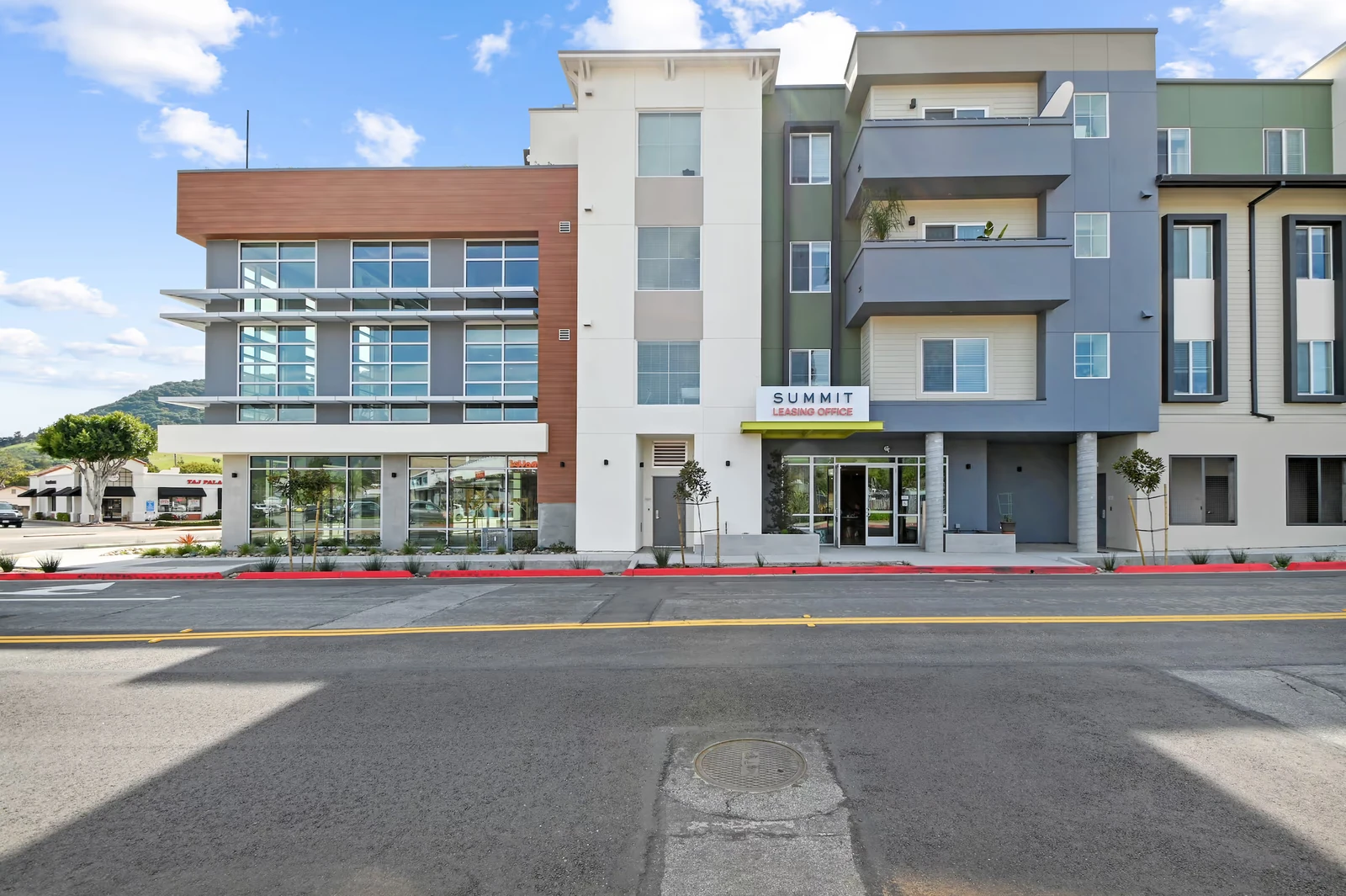
Where you live affects how easily cycling fits your schedule. Accessible bike parking, elevator access, and weather-protected storage remove friction before and after each ride. At Summit SLO, that setup supports travel from apartment to campus, downtown, or a weekend trail. Explore Summit SLO floor plans to compare apartment layouts.
Keep your helmet, lock, lights, rain layer, backpack cover, and repair kit together near the exit. With a reliable home base and a suitable route, SLO bike commuting becomes part of a student routine rather than another scheduled task.
Mastering the Routes: Insider Navigation for Every Commuter
The Railroad Safety Trail: Your Direct Line to Campus and Downtown
The Railroad Safety Trail is a useful spine between downtown SLO and the Cal Poly area. It provides a separated path through much of the central connection, limits exposure to fast traffic, and links with residential streets, downtown errands, and campus approaches.
Treat the trail as the backbone, not the whole trip. Check access points, slow near crossings, and plan the final blocks to your building or workplace. Morning crowds, walkers, runners, and surface changes can affect travel time. Bicycle directions can identify entrances, but verify the route in person before relying on it for a time-sensitive class.
Foothill Boulevard & Chorro Street Corridors: Navigating Key Arterials
Foothill Boulevard provides direct access near Cal Poly, though its grade, traffic, and turning activity may challenge newer riders. Chorro Street offers a central downtown and neighborhood connection with frequent intersections. Choose your lane position early, signal before turning, and watch driveways, bus stops, and parked cars.
For uphill travel, shift into an easier gear before the grade increases. Leave earlier, maintain a sustainable pace, and carry less when possible. If arriving without sweat matters, a flatter detour, slower pace, or transit backup may be preferable to the most direct climb.
Connecting Residential Hubs: Routes from Neighborhoods to Campus Hotspots
Identify your front door, nearest low-stress connector, and closest bicycle rack. Riders from downtown and the Railroad District can generally work toward the trail before approaching campus. Those near Broad Street can use neighborhood blocks to reach central connections. Residents east of campus should compare Foothill and Highland according to grade, traffic, and class location.
Break trips into residential exit, primary corridor, campus perimeter, and final approach. This makes changes easier when crossings feel uncomfortable or paths are crowded, and it identifies places to stop for water or adjustments without blocking pedestrians.
Beyond the Obvious: Scenic Detours and Weekend Exploration Spots
Daily commuting and weekend riding have different priorities. On a free afternoon, choose a quieter street, extend the ride through open areas, or connect neighborhood destinations into a loop. Consider weather, daylight, surfaces, and return time. A scenic detour should remain comfortable after sunset.
Use this simple route-planning sequence:
- Enter your exact origin and destination in a bicycle route planner.
- Compare the direct route with a trail-based and lower-traffic alternative.
- Preview steep grades, major crossings, railroad access points, and campus entrances.
- Ride the route once during daylight, noting confusing turns and secure parking.
- Save the preferred route and a backup before your first time-sensitive commute.
Ride Confidently: Local Laws, Safety, and Smart Navigation
SLO Sidewalk Rules & Road Positioning: Know Your Rights and Responsibilities
Safe SLO bike commuting starts with knowing where bicycles belong. San Luis Obispo Municipal Code Section 10.72.100 prohibits riding a bicycle on public sidewalks, including downtown sidewalks with heavy pedestrian traffic. Walk your bicycle when a sidewalk is the only comfortable way to reach a destination, then reenter the street at a suitable location. Check marked bike lanes, shared-use paths, and signed bicycle routes, but do not assume a wide sidewalk is legal for riding.
California Vehicle Code Section 21202 generally expects slower cyclists traveling below normal traffic speed to ride as far right as practicable, except when passing, preparing for a left turn, avoiding hazards, or using a lane too narrow to share safely. Hold a predictable line, scan parked-car doors, and signal before changing position. Claim the needed lane before an intersection instead of moving across traffic at the last moment.
Decoding Green Conflict Zones & Roundabout Smarts
Green pavement at a driveway or turning area marks a possible bicycle-vehicle crossing. Check front wheels, make eye contact when possible, and slow before entering. The City of San Luis Obispo reports zero right-hook collisions at California and Monterey after green conflict pavement was installed, though attentive riding and turning drivers remain necessary.
At a roundabout, slow before entry, yield to circulating traffic, and stay centered in the bicycle space or travel lane matching your route. Avoid a vehicle’s passenger-side blind spot, especially beside a truck or SUV. If the arrangement is unclear, dismount and use the pedestrian crossing while walking your bicycle.
E-Bike Essentials: Campus Paths, Laws, and Battery Management
An e-bike can make Foothill Boulevard or Highland-area grades easier, but pedal assistance does not remove traffic duties. Follow posted signs on city paths and Cal Poly pathways, yield to pedestrians, control speed near entrances, and dismount where required. Confirm that the bicycle’s class designation and equipment meet California requirements, including functioning brakes, reflectors, and a white front light plus red rear light after dark.
Start with enough battery for the round trip plus a reserve for detours, headwinds, or missed connections. Use lower assistance on flat sections and higher support for steep grades. Keep the battery away from standing water and extreme heat, use the manufacturer’s charger, and secure the bike where charging is permitted.
Safety First: Essential Gear and Visibility for Every Ride
A properly fitted helmet is the foundation of a commuter setup. Add front and rear lights, reflective details, a bell, and weather-appropriate layers. Bright clothing helps at dawn and dusk. Keep hands available for braking, secure loose straps, and avoid headphones that block traffic sounds near intersections.
Check tire condition, brake response, chain movement, and light visibility before leaving. In rain or low light, increase following distance and brake earlier because painted surfaces and metal covers may become slick. If fatigue, darkness, or traffic makes the route uncomfortable, choose a calmer street or pause in a well-lit public location. Preparation makes SLO bike commuting more controlled and predictable.
Gear Up and Secure Your Ride: The Commuter's Toolkit
Essential Commuter Kit: Lights, Locks, Helmets, and More
A dependable commuter setup should serve trips between your apartment, campus, work, and downtown. Start with a fitted helmet, white front light, red rear light, bell, U-lock or hardened chain, compact pump, tire levers, spare tube, multitool, and phone mount that does not block your view. A rear rack or pannier keeps books, groceries, and a laptop off your back.
Daily riders benefit from rechargeable lights, water-resistant bags, reflective details, and padded gloves. Evening riders should prioritize side visibility as well as front and rear beams. Carry a rain shell and a small cable for accessories. The best kit is compact enough for daily use but complete enough to address a flat tire.
The Anti-Theft Arsenal: Securing Your Bike Against High-Risk Theft
At campus racks, downtown stops, and apartment parking areas, fasten the frame and at least one wheel to a fixed rack. Place the lock inside the frame triangle, leave little room for cutting tools, and use a second lock for the remaining wheel when needed. Remove lights, bags, displays, and quick-release accessories when leaving the bicycle.
Record the make, model, color, frame number, and distinctive marks before the first ride. Keep receipts and photographs in cloud storage. If a rack is loose, damaged, or isolated from foot traffic, choose a better-lit location. Theft prevention depends on several small decisions, not one accessory.
Indoor Storage Solutions: Maximizing Your Premium Living Advantage
Weather-protected indoor storage limits sun exposure, moisture, dust, and accidental contact. Use a floor stand, wall mount, or vertical rack that supports the frame and does not block an exit. Wipe wet tires before bringing the bike inside, and use a tray if chain lubricant or road grit collects.
At Summit SLO, accessible storage can keep a bicycle protected and ready near the start of your routine. Do not charge an e-bike battery beside heat sources or in an unapproved area. Follow manufacturer instructions and keep corridors, stairwells, elevators, and fire equipment clear.
Maintaining Your Momentum: Basic Bike Care for the Everyday Rider
Each week, check tire pressure, brake pad wear, chain condition, wheel alignment, and bolt tightness. Correct pressure improves handling and reduces pinch flats, while a clean, lightly lubricated chain supports smooth shifting. After rain, dry the chain and metal components. Frayed cables, clicking, loose spokes, or pedal grinding warrant inspection.
Schedule a professional tune-up when shifting remains inconsistent, braking feels weak, or wheels no longer track straight. E-bike riders should inspect wiring, connectors, charger condition, and battery mounts without opening the battery housing. Maintenance keeps SLO bike commuting ready for the next class or errand.
Seamless Transit Integration: Beyond Your Bike
Biking with SLO Transit & SLORTA: Loading Your Bike for Longer Journeys
SLO Transit and SLORTA can extend your riding range when hills, distance, or weather make a full trip impractical. Check the current route, bike-rack instructions, and service updates. Most bus racks require curbside loading, front-wheel support, and removal of loose bags. Tell the driver before unloading.
- Arrive early enough to load without rushing.
- Ask the operator if the rack is available and follow the posted loading sequence.
- Place the bicycle securely, then board with your backpack and valuables.
- Watch for your stop, exit through the front, and unload from the curb side.
- Move away from the bus before adjusting straps or restarting your ride.
When to Park Your Bike: Planning for Weather and Distance
Use transit when rain reduces visibility, heat makes a climb uncomfortable, or a late return would mean riding unfamiliar streets in darkness. In moderate weather, use breathable layers, fenders, water-resistant storage, and dry clothes at your destination. For long trips, compare effort, battery range, elevation, and secure parking before riding the entire distance.
Your Car-Free Lifestyle: Maximizing Convenience and Freedom in SLO
Combining a bicycle with public transportation creates a flexible network. Ride the easy portion, use a bus for the steep section, and cycle the final blocks. Keep a transit card, portable charger, weather layer, and lock in one bag. Store a backup plan for service delays or a drained e-bike battery.
- Reduce parking searches near campus and downtown.
- Keep errands connected without moving a car between destinations.
- Adjust travel around grades, weather, work shifts, and class schedules.
- Preserve flexibility when a direct ride is no longer comfortable.
With secure storage, dependable gear, and transit as a backup, SLO bike commuting offers a practical way to move through the city. Choose the pace, connection, and altitude that fit the day. See The Canyon floor plan for a convenient Summit SLO home base.
Frequently Asked Questions
Is San Luis Obispo bike friendly?
Yes, San Luis Obispo is widely considered a bike-friendly city, with compact distances between Cal Poly, downtown, and nearby neighborhoods. Riders can use the Railroad Safety Trail as a separated path through the central connection, while calm neighborhood streets offer alternatives to heavier traffic corridors. Many students here build entirely car-free routines.
What is the 75% rule in cycling?
The 75% rule in cycling is a training guideline that suggests keeping most of your riding at a moderate, sustainable effort rather than going all-out every time. For commuters, this means choosing a pace that gets you to class without arriving sweaty. Shift into an easier gear before hills and leave a few minutes early.
How long is too long to commute by bike?
Most cyclists find 20 to 30 minutes each way sustainable for daily commuting, though fitness, hills, and weather all play a role. In San Luis Obispo, compact distances keep most student rides short between campus, downtown, and local neighborhoods. If a route feels draining, try a flatter detour or a transit backup.
What city is known as the bike capital of California?
Davis, California is widely known as the bike capital of the state, famous for its extensive network of bike lanes and high cycling participation. San Luis Obispo also earns a strong reputation as one of California's most bike-friendly cities. SLO's compact layout makes car-free student living genuinely practical.
What is the most bike-friendly city in California?
Davis frequently ranks as the most bike-friendly city in California, thanks to its flat terrain and dedicated cycling infrastructure. San Luis Obispo holds its own as well, with separated trails like the Railroad Safety Trail connecting downtown to Cal Poly. Both cities make everyday bike travel an easy part of life.
What is the best bike route for Cal Poly students commuting from downtown?
The Railroad Safety Trail is the most practical starting point, offering a separated path between downtown SLO and the Cal Poly area. Pair it with calm neighborhood streets for your final approach to your building. Test the full route in daylight before relying on it for a time-sensitive class.
How much money can bike commuting save compared to driving?
According to Rideshare.org, commuting by bike can save riders up to approximately $3,300 per year compared with driving and maintaining a car. Those savings come from cutting fuel, insurance, maintenance, and parking costs. Students also skip the daily stress of hunting for a spot near campus or downtown.