San Luis Obispo guide
Use this San Luis Obispo guide to get oriented before your first campus tour, move-in weekend, or Central Coast getaway. SLO brings together a walkable college-town core, Cal Poly’s hands-on academic culture, nearby beaches, mountain views, local food, and access to the wider county.
Key Takeaways
- SLO’s compact downtown and campus make it easy to walk from a study session to a coffee shop, so you can skip the car and save time.
- Cal Poly’s hands-on projects often spill into the community, giving you real-world experience while you explore local businesses and farms.
- You can trade your textbooks for a beach towel in under 20 minutes, with nearby shores perfect for a quick study break or sunset picnic.
- The local food scene is student friendly, from farmers market dinners to affordable taquerias that make eating well part of your routine.
- Use SLO as your launch pad for weekend adventures, with easy drives to wine country, hiking trails, and coastal towns that redefine “study abroad.”
Understand the geography first: the city, county, campus, downtown, and surrounding communities each offer a different pace. Knowing how they connect makes daily-life planning easier.
San Luis Obispo at a Glance: Central Coast Location, City vs. County and How to Get Here
San Luis Obispo is a Central Coast city known for college-town energy, historic downtown, outdoor recreation, food, and access to beaches and wine country. San Luis Obispo County is the larger region surrounding the city, including Pismo Beach, Morro Bay, Avila Beach, Paso Robles, and Cambria. Many students can manage without a personal vehicle when housing, classes, groceries, and social plans sit along connected bike and bus routes.
Know Before You Go
- City: The compact urban center surrounding Cal Poly and downtown SLO.
- County: A broad Central Coast destination with beaches, vineyards, rural areas, and smaller towns.
- Arrival: Highway 101 is the primary road connection, while San Luis Obispo County Regional Airport serves travelers flying into the area.
- Daily mobility: Walking, biking, local transit, rideshare, and occasional car rentals can cover many student and visitor needs.
One City, One County: Clearing Up the San Luis Obispo Map Confusion
“San Luis Obispo” and “San Luis Obispo County” are not interchangeable. The city is the central hub, with Cal Poly, Mission Plaza, restaurants, coffee shops, residential streets, and student apartments close together. The county reaches coastal communities, agricultural valleys, beach towns, and wine regions. When using a San Luis Obispo map, check whether a destination sits inside the city or requires a county drive.
Getting Here: Highway 101, the SLO Airport and Drive Times That Actually Matter
Highway 101 provides the main road connection through the Central Coast for trips from Southern California, the Bay Area, and the greater Sacramento region. The San Luis Obispo County Regional Airport is the closest commercial airport to campus. Confirm current airline routes, rental-car availability, and ground transportation through the airport before booking. Drive times to Pismo Beach, Morro Bay, Paso Robles, and other destinations vary with traffic, roadwork, and your starting point.
Do You Need a Car in San Luis Obispo?
Not always. Students near campus can often reach class, downtown, fitness facilities, cafes, and errands by foot or bicycle. A car helps with weekend beach trips, large grocery runs, trailheads outside town, internships in distant communities, and county exploration. Before bringing one, consider parking, insurance, fuel, maintenance, and whether your routine requires a vehicle.
Cal Poly and College Town Life: Campus, Downtown and Where Students Actually Live
Cal Poly San Luis Obispo: Learn by Doing, Live Minutes from Everything
Cal Poly centers on applied learning, project work, laboratories, studios, field experience, and its “Learn by Doing” identity. Campus life also includes clubs, recreation, student organizations, academic support, and outdoor spaces. Visit planning details, parking guidance, and campus information are available through Cal Poly’s official visit resource.
Location shapes the daily climb. A home near campus can reduce commute time and leave more room for office hours, group projects, clubs, meals, and recovery. The best fit depends on class schedule, budget, social pace, and tolerance for walking or biking in different weather.
Downtown SLO: Mission Plaza, Coffee Culture and Nightlife a Short Walk from Campus
Downtown SLO centers on Mission Plaza and nearby blocks, with coffee counters, restaurants, shops, public events, and evening gathering spots. Campus and downtown connect by walking, biking, and short rides, depending on your building and destination. Students can study on campus, eat downtown, and return home without planning an all-day trip.
Student Neighborhood Breakdown: Campus Edge, Downtown Core and South SLO
Think about neighborhoods by routine. The campus edge favors students who want the shortest trip to classes and university resources. The downtown core suits residents who prioritize restaurants, coffee, entertainment, and active street life. South SLO offers a quieter residential feel while keeping many errands and routes within reach. Review transit, bike storage, parking, grocery distance, noise, lease terms, and roommate setup before choosing an address.
| Area | Best for | Trade-off to consider |
|---|---|---|
| Campus edge | Fast class access and university involvement | Less separation between school and home |
| Downtown core | Dining, coffee, events, and an active social routine | More evening activity and limited parking |
| South SLO | Residential calm with access to daily errands | Potentially longer trips to central campus |
Where to Stay in San Luis Obispo: Hotels vs. Furnished Student Housing
Your stay depends on its length and purpose. A hotel suits a campus tour, weekend, or short Central Coast road trip. Students living near Cal Poly need a setup for classes, groceries, studying, exercise, and community throughout an academic term. Furnished student housing can provide a steadier routine than a traditional booking.
Hotel Picks by Traveler Type: Downtown, Near Campus, Budget and Extended Stay
Start with location and purpose. Downtown lodging places you near Mission Plaza, restaurants, coffee shops, events, and evening activity. Near-campus lodging simplifies an early tour, orientation appointment, or family visit. Budget travelers should review parking fees, breakfast, cancellation terms, and transportation access instead of judging the nightly rate alone. Extended-stay guests should look for a kitchenette, laundry, workspace, refrigerator, and comfortable room layout.
| Traveler type | Most useful location or feature | Booking details to check |
|---|---|---|
| Prospective student and family | Near campus, with straightforward parking and visit access | Tour timing, check-in hours, cancellation policy |
| Weekend visitor | Downtown access for dining, coffee, and walkable plans | Event dates, noise levels, parking, and taxes |
| Budget traveler | Essential amenities with access to transit or a practical driving route | Total cost, breakfast, deposits, and transportation expenses |
| Extended-stay guest | Kitchenette, laundry, desk space, and room to settle in | Weekly terms, housekeeping schedule, and utility inclusions |
Staying Longer? Furnished Student Housing Beats a Hotel Booking
A hotel solves temporary lodging; student housing supports an academic year. A furnished apartment removes the need to source a bed, desk, sofa, kitchen basics, and household equipment before classes begin. Individual by-the-bed leasing can separate your financial responsibility from a roommate’s agreement, while roommate matching helps students arriving without an established social circle.
The value appears in the routine: a real kitchen, dedicated study area, shared amenities, and a home base near campus. Ask about lease length, furnishing, utility limits, internet, maintenance response, guest policies, parking, package handling, and move-in procedures. A local leasing team can explain included services and resident responsibilities.
Inside The Summit: All-Inclusive, Furnished Living Near Cal Poly
Summit SLO is designed for students seeking a complete living experience. Apartments come furnished, with individual by-the-bed leases and roommate matching built around a student routine. All-inclusive utilities simplify monthly planning, while shared spaces provide places to focus, recharge, and connect.
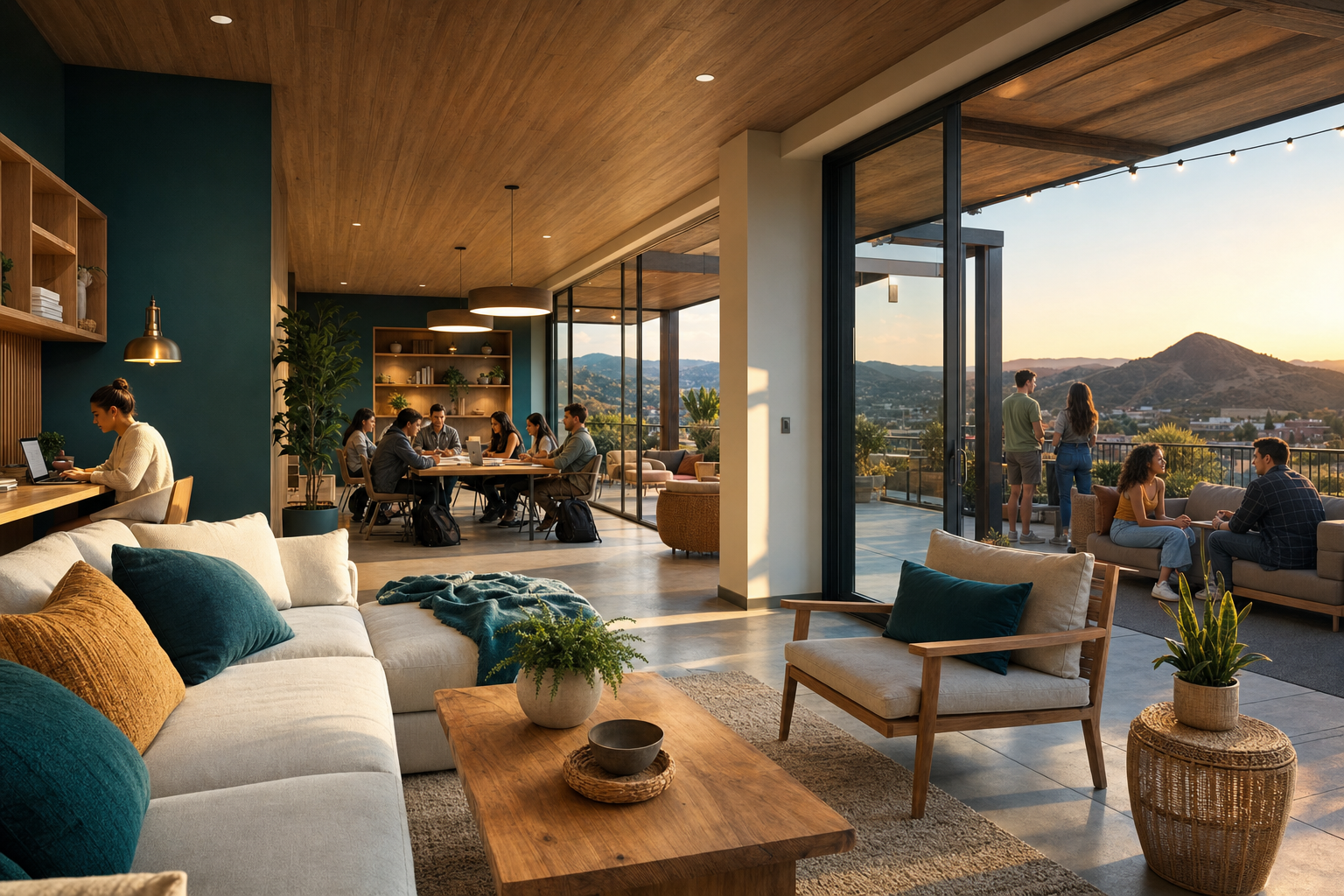
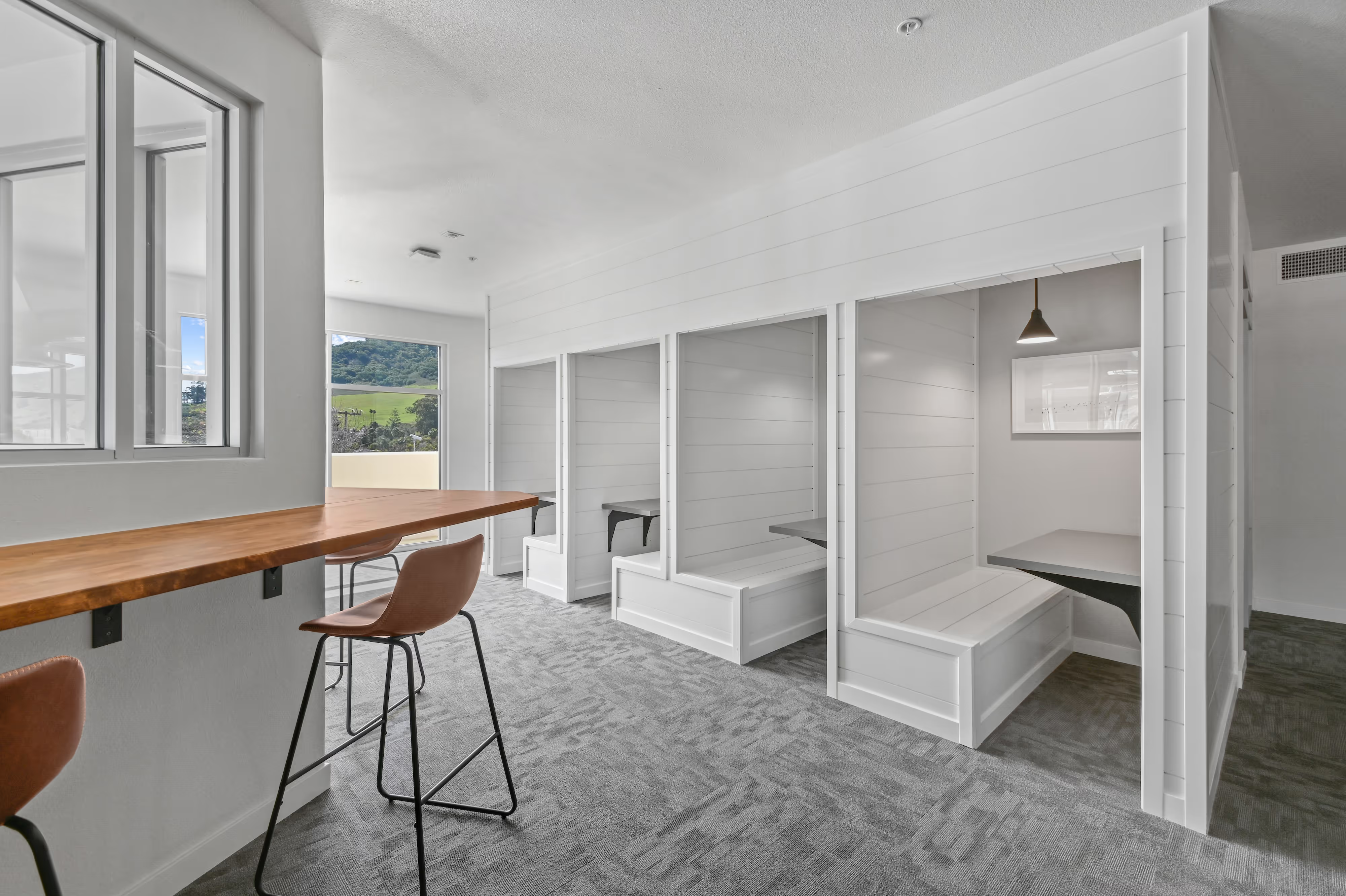
A rooftop lounge supports sunset conversations, 24/7 fitness access fits between classes, and study spaces support projects and exam preparation. Housing affects how easily you manage a demanding schedule, welcome friends, protect quiet study time, and settle into a new city. Review current Canyon floor plans, compare the Cerro apartment layout, and explore rates and availability at summitslo.com/floorplans, then reserve a tour before limited availability narrows your options.
The Best of SLO: Food, Wine, Mission History and Ready-Made Itineraries
SLO rewards travelers who combine a downtown morning with a wider county outing. Build plans around your purpose, whether visiting Cal Poly, hosting family during move-in weekend, or adding coastal scenery to a longer trip. Leave room for parking, reservations, changing weather, and the slower pace of a Central Coast day.
Eat and Drink Your Way Through Downtown: Breakfast Spots, Breweries and Wine Tasting
Begin downtown with breakfast and coffee, walk through Mission Plaza, and visit Mission San Luis Obispo de Tolosa for local history. Continue with lunch, independent shops, and an afternoon brewery visit or wine tasting room. Students can make this a low-cost social plan by choosing one anchor activity and filling the gaps with public spaces and conversation.
Beyond the City: Edna Valley Wine, Avila Beach and Morro Rock
With a vehicle or planned ride, expand beyond city limits. Edna Valley offers vineyard views and tasting rooms, Avila Beach has a relaxed shoreline setting, and Morro Rock is a memorable coastal photo stop. Check visitor information, reservations, beach conditions, parking rules, and road updates before leaving. Travel times vary, so avoid stacking distant destinations into one afternoon.
Choose Your SLO Experience: Prospective Student Visit, Parent Weekend or Three-Day County Stay
| Trip style | Suggested flow | Planning priority |
|---|---|---|
| Prospective student visit | Campus tour, downtown meal, neighborhood walk, housing questions | Match lodging and route planning to the tour schedule |
| Parent weekend | Campus activity, Mission Plaza, shared dinner, relaxed morning coffee | Reserve dining early around university events |
| Three-day county stay | Downtown history, Edna Valley or Avila Beach, Morro Bay coastal outing | Group destinations by direction to reduce driving |
For current visitor information, event calendars, dining ideas, and lodging categories, consult Visit SLO. Start with the walkable core, then move toward vineyards, beaches, and coastal views.
Making Friends and Feeling at Home: A Newcomer's Playbook for SLO
Arriving in a new college town can feel lonely, even when campus is full of people. Build connection through repeatable points of contact: a student organization, fitness class, study group, volunteer shift, intramural team, or shared meal. Familiarity turns introductions into friendships.
Hard to Make New Friends? Repeatable Strategies That Work in a College Town
Start with two commitments that match your interests and one that stretches your routine. Attend the same club meeting for several weeks, introduce yourself, and suggest a specific follow-up such as coffee, library time, or a downtown walk. Student-housing shared spaces can help: a rooftop lounge, study room, fitness center, or community event creates conversation without requiring a formal invitation.
- Put recurring events on your calendar before the first week becomes crowded.
- Learn and use names, then follow up within a few days.
- Invite one person to a low-pressure plan with a clear time and place.
- Keep showing up after an awkward first meeting.
A Solo Day in SLO: Breakfast, an Accessible Hike, a Study Stop and Dinner
Begin with breakfast or coffee in a busy public area, then choose an accessible trail or open-space route suited to your experience, footwear, weather, and daylight. Check conditions, closures, parking rules, and advisories through the relevant city, county, parks, or land-management agency. Afterward, use a library, cafe, or campus study area for focused work. Finish with an early dinner in a well-trafficked district.
Getting Around After Dark: Well-Lit Routes, Buddy Systems and Rideshare Smarts
Decide transportation before leaving. Choose well-lit routes with pedestrian activity, share your destination with a trusted person, and walk with a buddy when possible. Keep your phone charged, watch traffic and surroundings, and avoid isolated shortcuts. For rideshare, verify the vehicle, driver, and license plate, then share trip status. Check current campus transportation resources and local service schedules before an evening event.
Your First Month: From Move-In Weekend to Your New Favorite Spots
Move-in weekend creates activity, but belonging grows through routines. Explore one new cafe, park, dining room, or campus resource each week and notice where you would return. Furnished rooms, roommate matching, communal amenities, study areas, and shared spaces can make casual connection easier while preserving privacy for rest and coursework. Summit SLO is built for that student rhythm.
Measure your first month by dependable contacts, a familiar route, and places that feel like yours rather than by the size of your friend group. Ready to raise your everyday routine? Explore Bishop student apartments or view Osos floor plans before limited openings become harder to claim.
Frequently Asked Questions
What are some must-do things to do in San Luis Obispo?
San Luis Obispo must-dos include exploring Mission Plaza, strolling downtown, visiting Cal Poly, biking local routes, and taking day trips to nearby beaches. San Luis Obispo County also offers Morro Bay, Pismo Beach, Avila Beach, wine country, hiking trails, and scenic drives. Build your plans around the city when you want an easy, walkable day.
What did Oprah say about San Luis Obispo?
Oprah Winfrey helped raise San Luis Obispo’s profile by naming it one of America’s happiest places in a 2010 feature. San Luis Obispo still attracts attention for its small-city pace, outdoor access, food scene, and friendly college-town energy. The recognition became part of the city’s popular identity, even as local experiences continue to define it.
What are some hidden gems in San Luis Obispo County?
San Luis Obispo County hidden gems include Avila Beach, Montana de Oro State Park, Los Osos, local farm stands, quiet trailheads, and smaller coastal viewpoints. Travelers can find a slower pace beyond the city’s downtown core, with beaches, vineyards, rural roads, and uncrowded outdoor spaces. Check seasonal conditions, parking rules, and access details before heading out.
Is San Luis Obispo liberal or conservative?
San Luis Obispo is generally viewed as a liberal-leaning college town, while the broader county includes a wider mix of political perspectives. Cal Poly, younger residents, and downtown culture shape the city’s social feel, while rural communities and inland areas may feel different. Visitors and students can expect varied opinions across the county.
What celebrities live in San Luis Obispo?
San Luis Obispo County has attracted celebrities and public figures who value privacy, open space, beaches, and wine country, but reliable public information about current residents is limited. Names linked to the area can change, and rumors are not dependable. Focus on public attractions, local events, and respectful sightseeing rather than searching for private homes.
Is San Luis Obispo a good place for Cal Poly students?
San Luis Obispo is a strong fit for Cal Poly students who want campus access, outdoor recreation, downtown dining, and a manageable college-town routine. Many students can walk, bike, use local transit, or take short rides for daily needs. Neighborhood choice matters, so compare class routes, groceries, parking, noise, and study habits before signing a lease.