rooftop barbecue apartments
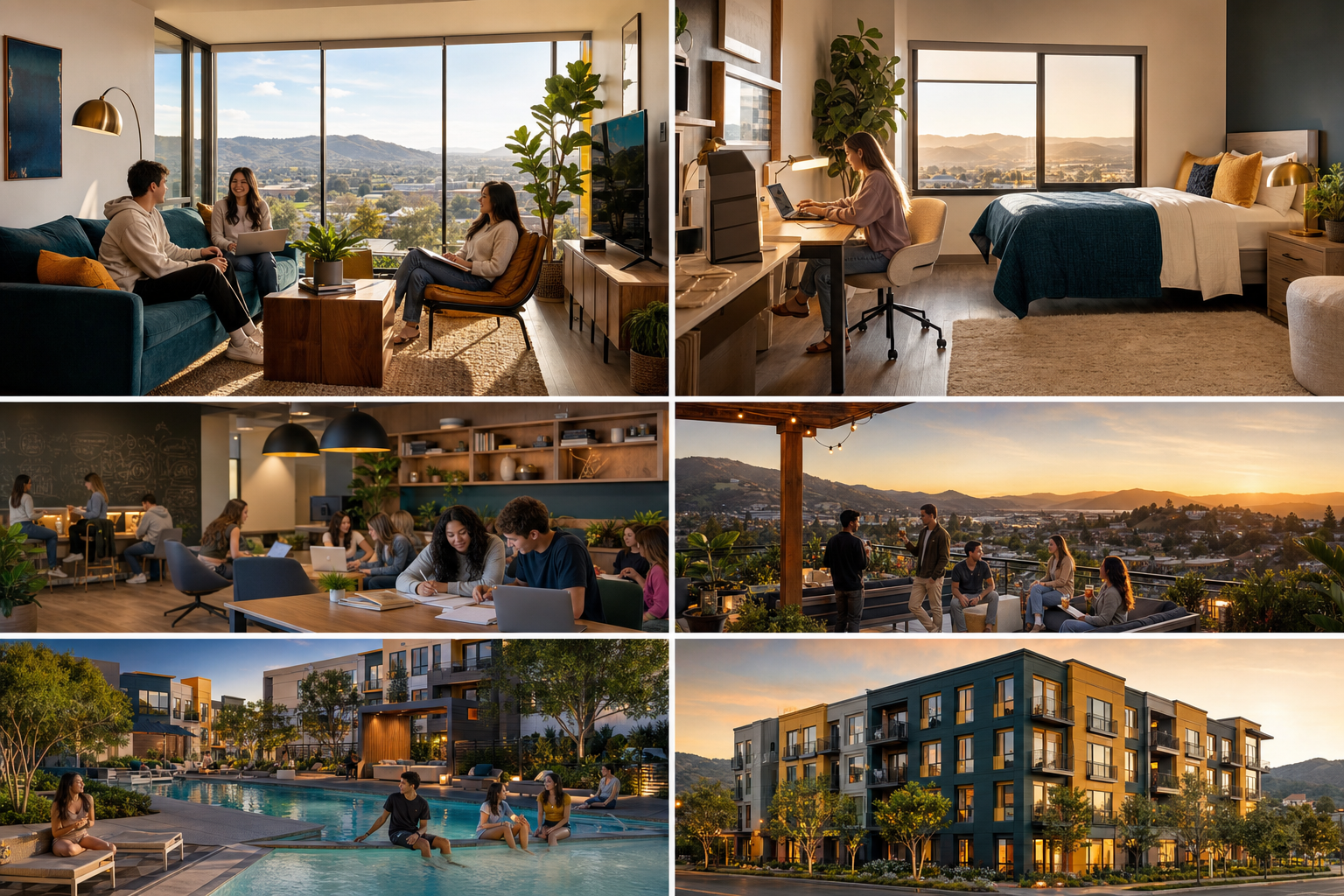
Apartment living does not have to mean giving up the pleasure of cooking outdoors. Rooftop barbecue apartments bring grilling, fresh air, social space, and elevated views into the same community, giving residents a practical alternative to cramped balconies, crowded parks, or takeout. At Summit SLO, that kind of amenity fits the rhythm of student life: study indoors, meet friends upstairs, and turn dinner into an evening above the city.
Key Takeaways
- Rooftop barbecue apartments give renters a way to grill outdoors without needing a private yard or a cramped balcony.
- These shared spaces combine cooking, fresh air, and skyline views, so a weeknight dinner can feel like a genuine event.
- Students can trade takeout routines and crowded public parks for a grilling spot just an elevator ride away.
- A rooftop grill area doubles as a social hub, making it easy to study all day and gather with friends after sunset.
- Choosing a community with this amenity means everyday apartment living comes with a built-in venue for hosting above the city.
The details matter, though. A rooftop grill area is more than a few cooking stations beside a lounge. Residents should understand access rules, fuel type, reservations, seating, shade, cleaning expectations, guest limits, quiet hours, and fire-safety procedures before choosing a community. The best rooftop setup feels effortless because the property team has planned for both enjoyment and responsible use.
What is rooftop barbecue apartments?
Rooftop barbecue apartments are apartment communities with shared outdoor grilling facilities on a roof deck, terrace, or elevated amenity floor. These spaces commonly include gas, charcoal, or electric grills, dining tables, lounge seating, lighting, shade structures, and views. They are designed for resident use rather than private grilling inside an apartment or on a personal balcony.
Access varies by property. Some communities allow residents to use the stations during posted amenity hours, while others require an online reservation, especially for larger gatherings. A property may supply utensils and fuel, or it may ask residents to bring approved supplies. Before grilling, confirm whether guests are permitted, which foods are allowed, how cleanup works, and whether the rooftop closes during high winds, poor air quality, or fire-weather conditions.
Benefits of rooftop barbecue apartments
The biggest advantage is usable space. A well-designed roof deck gives residents room to cook, eat, and gather without crowding a small apartment kitchen. Multiple cooking stations can make weekend meals easier when friends arrive, while nearby tables and counter space keep plates, ingredients, and drinks organized. Residents can enjoy an outdoor meal without transporting a portable grill to a public park or storing fuel in limited apartment storage.
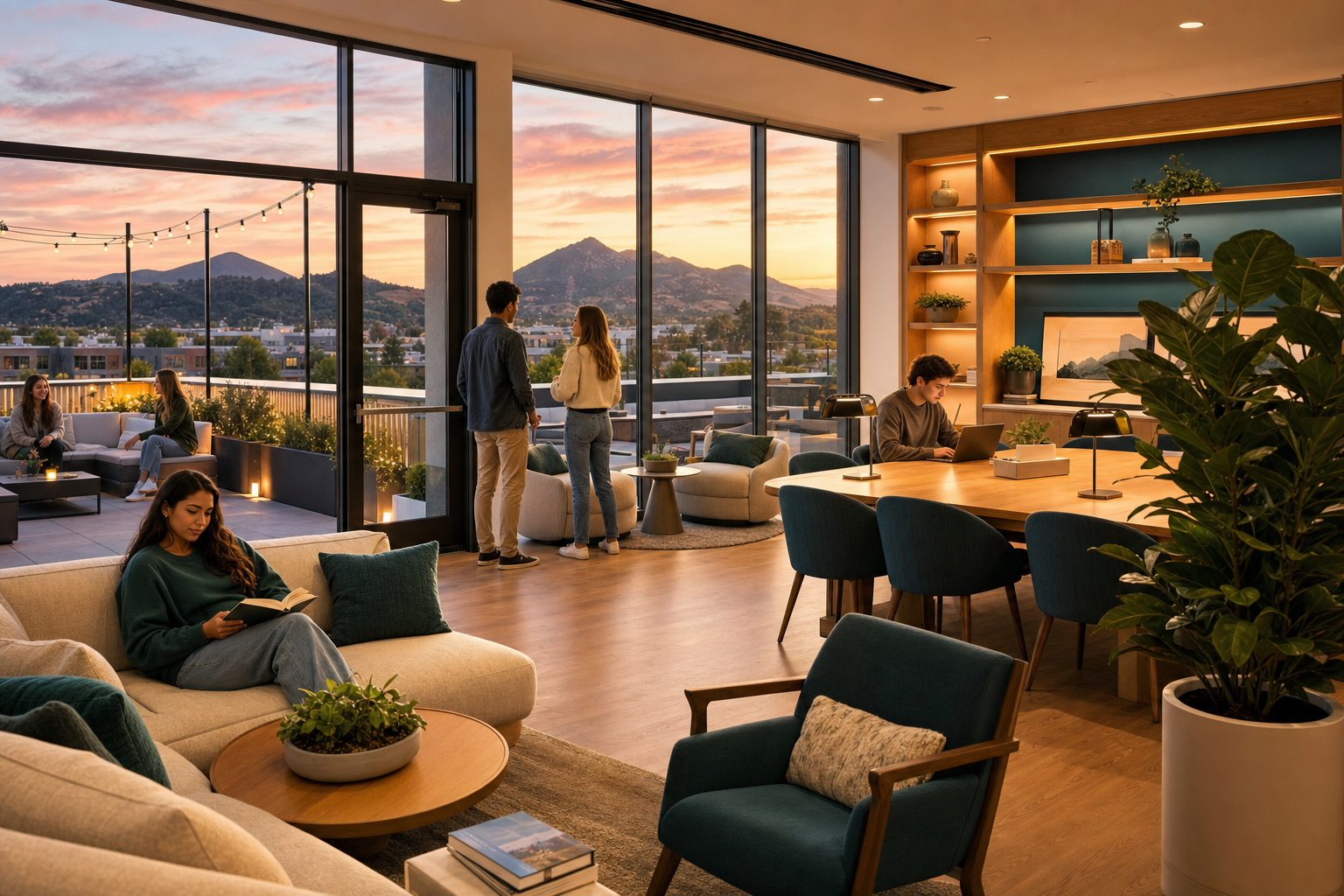
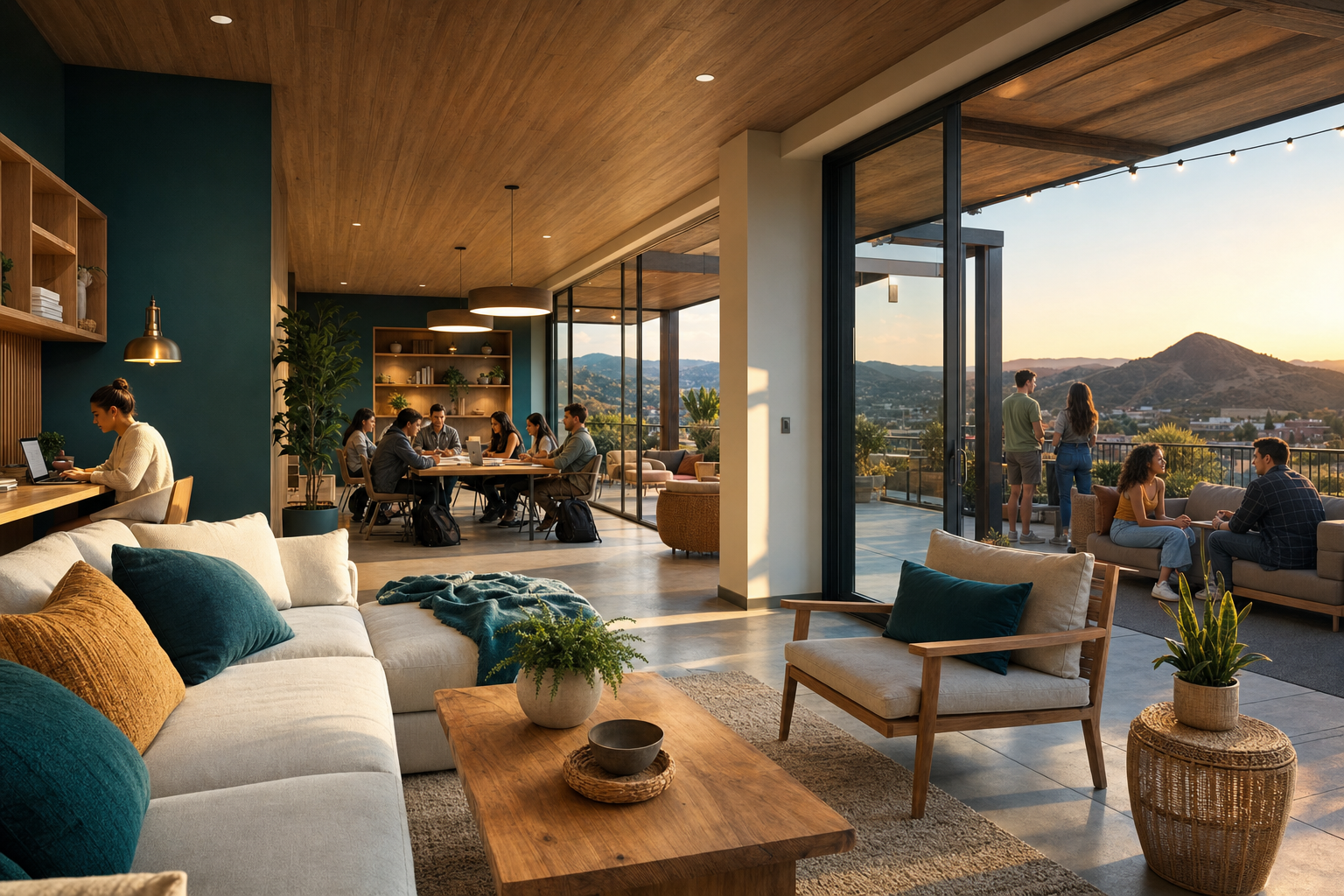
Shared grilling also creates a natural meeting point. A casual conversation near the prep counter can become a study group, club connection, or new friendship. For students balancing classes, internships, athletics, and campus activities, the rooftop offers a social setting that does not require a long drive. Sunset seating, city views, comfortable furniture, and ambient lighting can turn an ordinary dinner into a memorable part of the college routine.
There are practical benefits for neighbors, too. Designated rooftop stations keep high-heat cooking away from bedrooms, private patios, combustible furnishings, and apartment interiors. Centralized equipment makes it easier for management to schedule inspections, maintain propane or natural-gas connections, provide fire extinguishers, and post operating instructions. Smoke and food odors still require consideration, so residents should follow ventilation guidance, keep doors closed when appropriate, and report malfunctioning equipment promptly.
Safety depends on the property’s rules and local guidance, not on assumptions copied from another city. For example, some New York City guidance references a 10-foot clearance requirement, but that figure should not be treated as a universal California standard. San Luis Obispo residents should confirm clearance, weather restrictions, fuel storage, and emergency procedures with the local fire authority, the community operations team, or the building’s insurer. Responsible policies protect the rooftop experience while keeping the summit welcoming for everyone.
How to Choose rooftop barbecue apartments
Start with access, not the view. Ask whether every resident may use the rooftop grill stations, whether reservations are required, and how far ahead a booking can be made. A convenient community should explain amenity hours, holiday access, guest limits, maximum group size, cancellation rules, and any restrictions for private events. Request the policy in writing so the rooftop fits your schedule rather than becoming a feature you rarely use. At Summit SLO, prospective residents can evaluate the full experience by viewing the terrace, seating areas, cooking stations, shade, lighting, and surrounding views in person. Explore Summit SLO floor plans to compare available apartment layouts alongside the community amenities.
Inspect the cooking setup as carefully as you would inspect an apartment kitchen. Confirm whether the grills use natural gas, propane, charcoal, or electricity, and ask who supplies fuel, utensils, cleaning products, and replacement parts. Multiple stations can reduce waiting during a busy dinner period, while nearby prep counters, sinks, trash bins, dining tables, and refrigeration make the space easier to use. Look for readable operating instructions, visible fire extinguishers, sturdy lids, uncluttered walkways, and equipment that appears clean and well maintained. Ask how residents report a broken igniter, empty fuel supply, damaged furniture, or excessive smoke. For a specific layout option, review The Canyon apartment floor plan.
Review the rules that protect comfort throughout the building. A well-managed rooftop should address food storage, grease disposal, open flames, charcoal handling, weather closures, air quality, music, guest behavior, and quiet hours. Smoke and cooking odors should not drift unchecked toward indoor amenity rooms or neighboring windows. Ask whether doors must remain closed during grilling, whether portable speakers are permitted, and whether staff inspect the area after reservations. Also confirm whether residents may bring a personal grill. Many communities prohibit private equipment because of fire, insurance, ventilation, or fuel-storage concerns, so never assume a small portable model is acceptable.
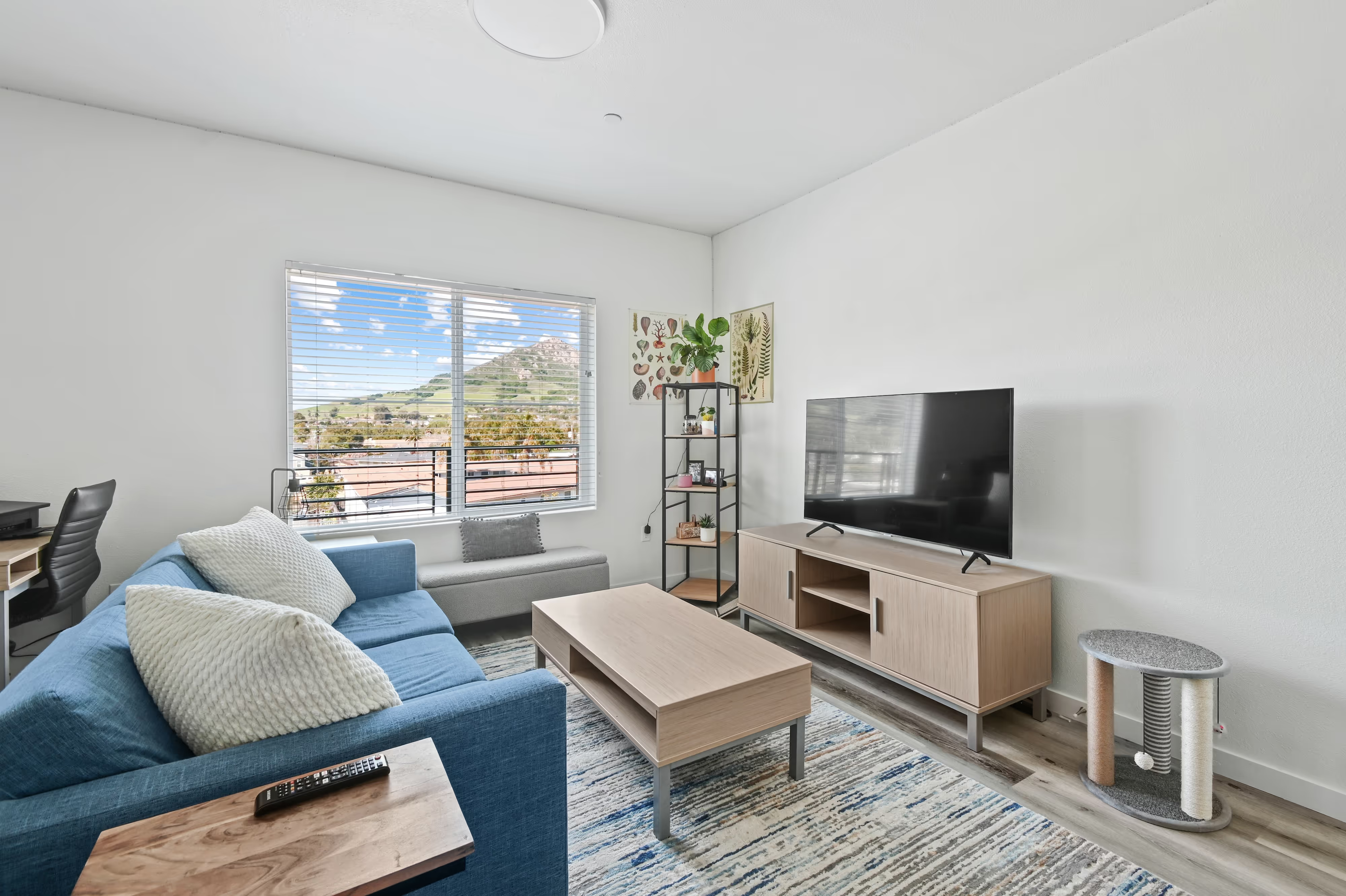
Finally, consider how the rooftop supports your actual routine. Visit at a realistic time, such as early evening, to observe noise levels, elevator access, seating availability, lighting, and the distance between the grills and dining areas. Check whether the space offers enough shade during warm afternoons and comfortable shelter when coastal weather changes. Read the lease, amenity agreement, and community handbook for cleaning charges, damage responsibility, reservation deposits, and guest policies. The right choice combines reliable equipment with a social atmosphere, practical rules, and enough room to move from a quick weeknight meal to a relaxed gathering above the city. Compare another spacious option, The Cerro floor plan, when evaluating your apartment choices.
Frequently Asked Questions
Do all residents have access to rooftop grills?
Access depends on the community’s amenity policy. Many properties allow residents to use shared grill stations during posted rooftop hours, while some limit access to residents who complete an orientation or make a reservation. Ask whether guests may join you, whether a resident must remain present, and whether private events have separate requirements. The lease, resident handbook, or property manager should provide the most reliable answer.
Do rooftop grills require reservations?
Some do, especially when the rooftop includes several dining areas or attracts heavy evening use. A reservation system may identify available time slots, set a maximum group size, and help staff coordinate cleaning between gatherings. Other communities use first-come, first-served access for smaller meals. Confirm the booking window, cancellation policy, time limit, guest allowance, and any cleaning or damage deposit before planning a celebration.
Are apartment rooftop grills gas, charcoal, or electric?
Shared stations may use natural gas, propane, charcoal, or electricity. Gas and electric models typically offer quick startup and simpler cleanup, while charcoal creates a different cooking profile and may be restricted because of ash, smoke, storage, or fire-safety concerns. Do not bring fuel, lighter fluid, or charcoal until management confirms that the item is approved. The community should also explain who supplies fuel and how residents report an empty tank or equipment problem.
Can you bring your own grill to an apartment rooftop?
Usually, residents may use only the equipment supplied by the property. Personal grills can create concerns involving clearance, hot surfaces, fuel storage, smoke, insurance, and damage to rooftop furnishings. A small portable model is not automatically safe or permitted. Request written approval before bringing any cooking device, including an electric unit. If the property prohibits personal grills, use the designated stations and follow posted operating instructions.
Can the rooftop close during bad weather?
Yes. High winds, extreme heat, poor air quality, rain, or elevated fire danger may lead management to suspend grilling or close the entire deck. Follow closure notices, extinguish burners promptly, and never leave food or cooking equipment unattended. For local requirements, ask the property team which San Luis Obispo fire-safety guidance applies to rooftop cooking and fuel storage.