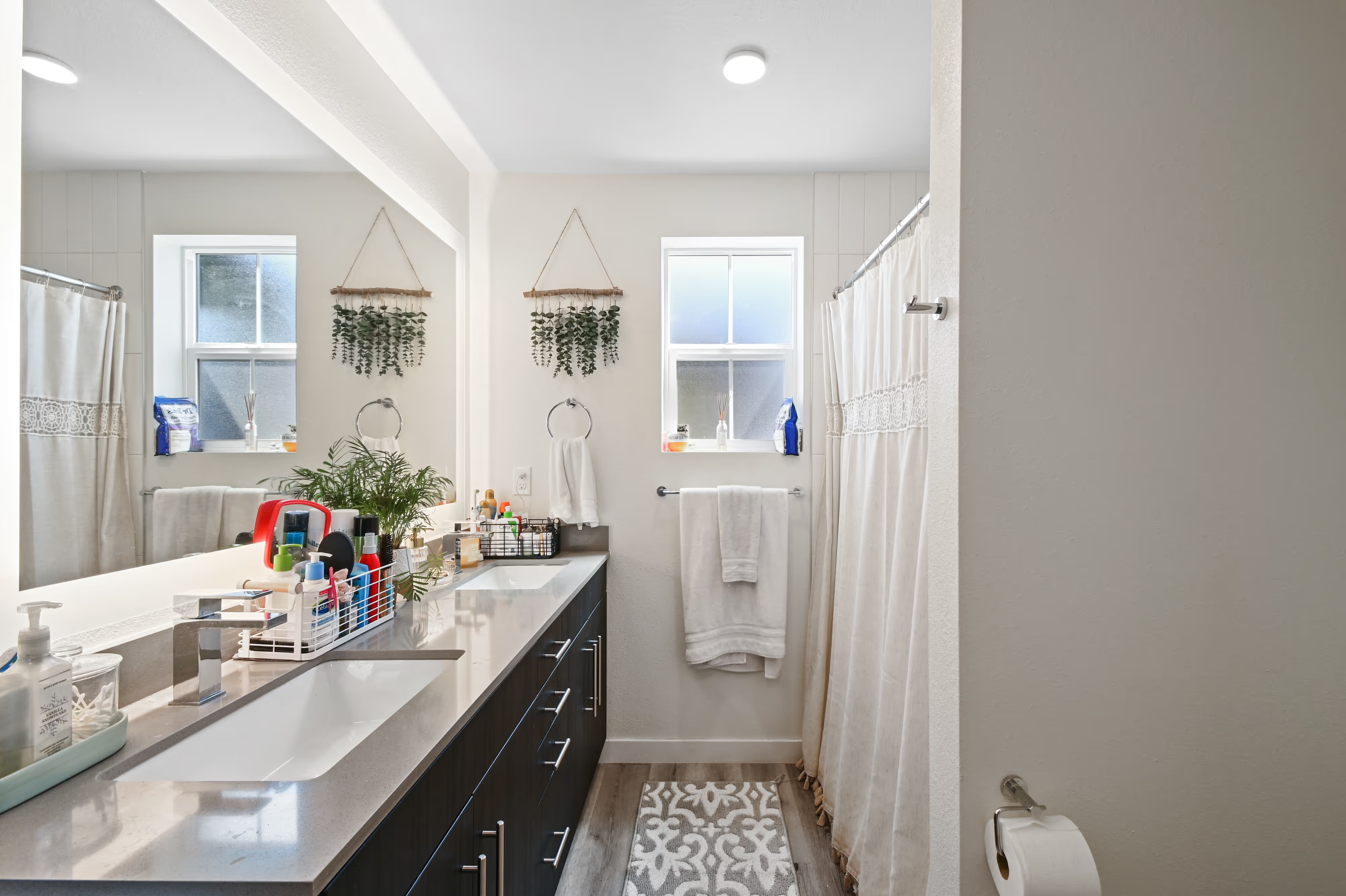
private bedroom apartments
College housing should give you room to focus, recharge, and connect on your own terms. Private bedroom apartments offer that balance by pairing an individual sleeping and study space with shared areas where roommates can cook, relax, and build community.
Key Takeaways
- Private bedroom apartments let you keep a dedicated space for sleep and study while still sharing kitchens and living rooms with roommates.
- Having your own bedroom means you set the rules for your environment, whether that means late-night study sessions or quiet mornings without disturbing anyone.
- Roommate relationships often grow stronger when each person has a personal retreat to recharge in between shared meals and hangouts.
- This housing style strikes a balance between independence and community, so your living situation supports both your academics and your social life in San Luis Obispo.
The best choice starts with knowing exactly what the floor plan includes. Bedroom size, bathroom access, furnishings, laundry, utilities, guest rules, and lease structure can shape your daily experience as much as the apartment’s style. Think of this guide as your route from base camp to a higher standard of student living.
What is private bedroom apartments?
A private bedroom apartment is a shared student apartment in which each resident has a bedroom reserved for personal use. The kitchen, living room, entryway, and sometimes bathrooms are shared according to the floor plan. This arrangement gives students a quiet place for sleeping, studying, and storing personal items without removing the social benefits of living with roommates.
“Private” usually describes the bedroom, not the entire apartment or bathroom. A bedroom may connect to a private bathroom, a shared bathroom, or a bathroom shared with one roommate. Before signing, review the current floor plan and ask how many residents use each bathroom, where laundry is located, whether utilities and internet are included, and whether furniture comes with the lease. Those details prevent surprises after move-in.
Layout affects the rhythm of everyday life. A bedroom near a shared living room may offer easy access to conversation and activities, while a room farther from common areas may provide more quiet. Look at closet dimensions, window placement, desk space, outlet locations, ventilation, door locks, and natural light. Photos can help, but an accurate tour or clearly labeled rendering gives a better sense of scale, finishes, noise, and circulation.
Benefits of private bedroom apartments
The biggest benefit is control over personal space. Students can close the door for a focused study session, an early night, or a few minutes of uninterrupted downtime. That separation can make it easier to organize textbooks, clothing, electronics, and daily essentials. It also gives roommates natural boundaries, which supports a more comfortable household routine during exams, busy club schedules, and long campus days.
This format also keeps community within reach. Shared kitchens and lounges create opportunities for group meals, casual conversations, and study sessions, while the individual bedroom provides a reset point afterward. Students who want both privacy and connection do not need to choose one or the other. The right floor plan creates an elevated home base where social energy and personal recovery can coexist.
Another advantage is a clearer sense of responsibility. In a shared apartment, roommates can divide cleaning schedules, grocery storage, household supplies, and cooking duties. At the same time, each resident maintains a personal zone that does not require constant negotiation. Ask about roommate matching, quiet hours, guest policies, pet rules, maintenance response, and cleaning expectations before move-in. Clear policies help protect the atmosphere everyone expects.
Financial planning can also become more transparent when you calculate the full monthly housing picture. Look beyond advertised rent and account for electricity, water, gas, internet, furnishings, laundry, parking, transportation, application costs, deposits, and move-in fees. A furnished apartment near campus may change the value equation by reducing purchases and commute time. Request a written breakdown of included services and separate charges so your budget reflects actual living costs.
Finally, private bedroom apartments can support a smoother transition into independent living. Students practice managing a lease, communicating with roommates, maintaining a bedroom, and caring for shared facilities while still having a built-in social network. Inspect bathrooms, kitchen appliances, flooring, locks, windows, and common-area finishes during a tour. Clean, well-maintained spaces build confidence from the first step inside, while accurate photos and transparent property details signal that the path ahead has been clearly marked.
How to Choose private bedroom apartments
Choosing private bedroom apartments starts with the floor plan, not the lifestyle photos. Confirm the bedroom’s dimensions, window placement, closet capacity, desk area, outlets, ventilation, and lock before you evaluate finishes or rooftop amenities. Ask whether the room is assigned individually, whether roommates can access it, and whether the listed images show a completed space or a rendering. A virtual tour can reveal circulation, natural light, hallway noise, and the distance between your door and shared areas. If possible, tour the exact floor-plan type you are considering, since room sizes and bathroom access can vary within one building.
Next, map the shared spaces and daily routines. Identify how many residents use each bathroom, where kitchen cabinets and refrigerator shelves are assigned, and whether the living room provides enough seating for the household. Check laundry access, machine availability, operating hours, package delivery, trash removal, elevator access, and bicycle storage. A bathroom inspection should include shower condition, ventilation, water pressure, storage, counter space, and cleaning responsibilities. Ask how maintenance requests are submitted and how urgent repairs are handled. These practical details shape your mornings, study sessions, and evenings more than staged décor does.
Review the lease as carefully as the apartment. Determine whether you sign for an individual bedroom or share responsibility for the full unit, and ask how roommate changes, subleasing, renewals, early termination, and vacancy are handled. Request a complete cost sheet that separates rent from utilities, internet, furniture, parking, laundry, transportation, application charges, deposits, and move-in fees. Also confirm occupancy limits, guest rules, quiet hours, pets, smoking, renter’s insurance, and cleaning expectations. A low advertised rate may not represent the full monthly housing cost when several services remain separate.
Finally, evaluate the property’s management practices and location as part of the same decision. Look for current photos, accurate availability, clear contact information, documented maintenance procedures, controlled entry, exterior lighting, and well-maintained common areas. Measure the commute to campus by your actual routine, including walking time, bike storage, bus access, parking, and late-night transportation. Consider how the apartment supports your priorities: uninterrupted study, easy roommate connection, fitness, dining, social events, or recovery after a demanding day. When each promise matches the floor plan, lease, tour, and written cost breakdown, you have a clear route toward the height of student living.
Frequently Asked Questions
Does a private bedroom include a private bathroom?
Not necessarily. “Private” generally refers to the sleeping room, while bathroom access depends on the floor plan. You may have an attached bathroom, a bathroom shared with one roommate, or a facility used by several residents. Ask for a labeled layout that shows bathroom access, confirm the arrangement with leasing staff, and check whether cleaning supplies or housekeeping services are included. This single detail can significantly affect morning routines, storage, and personal comfort.
Which apartment spaces do roommates share?
Shared areas commonly include the kitchen, living room, entryway, hallways, and laundry facilities. Some homes also share balconies, patios, study lounges, package areas, or storage. Ask how cabinet space, refrigerator shelves, pantry sections, and living-room furnishings are allocated. It is also wise to understand household expectations for dishes, trash, guests, noise, and cleaning. A written roommate agreement can turn informal assumptions into clear daily standards.
Is a private bedroom better than a shared bedroom for college students?
It can be a strong choice for students who need quiet study time, personal storage, or a dependable place to recharge. A shared bedroom may suit someone who prefers constant company or wants the simplest possible housing arrangement. The better option depends on sleep schedules, budget, study habits, social preferences, and tolerance for shared personal space. Visit the room, assess sound transfer and natural light, and compare the total monthly cost before deciding.
How many roommates might I have?
The number varies by occupancy and floor plan. A two-bedroom apartment may house two residents, while a larger student unit may include several bedrooms and a corresponding number of roommates. Confirm the maximum occupancy, whether bedroom assignments are individual, and whether management matches roommates. Also ask how a vacancy is handled, since a replacement resident can change the household dynamic. The clearest recommendation is to choose a layout that supports your preferred balance of privacy, community, and budget, then verify every term before signing.