Cal Poly housing planning
Cal Poly housing planning is changing the path from admission to move-in. With limited on-campus availability and high San Luis Obispo rental prices, students need more than a last-minute search. They need a clear view of upcoming beds, housing guarantees, building updates, cost support, and daily access to campus.
Key Takeaways
- Cal Poly housing planning is changing the path from admission to move-in.
- With limited on-campus availability and high San Luis Obispo rental prices, students need more than a last-minute search.
- They need a clear view of upcoming beds, housing guarantees, building updates, cost support, and daily access to campus.
Think of housing as base camp for your college experience. The right plan gives you a reliable place to sleep, study, connect, and recharge near Cal Poly, with practical options for transfer students, continuing students, and incoming Mustangs. Here is what the university’s housing expansion means and why it matters as you map your next move.
What is Cal Poly housing planning?
Cal Poly housing planning is the university’s long-term effort to add, renovate, and organize student residences while improving access to campus living. According to Cal Poly Housing, the program includes 3,500 to 4,100 new beds across nine buildings. The university’s stated goal is to nearly double on-campus capacity, from approximately 7,800 beds to 15,000 beds by 2035.
The plan includes both new construction and updates to existing residence halls. Cal Poly’s Facilities Planning and Capital Projects program describes a total investment of about $1 billion, the largest investment in university history. Modular construction is part of the approach, allowing sections of a building to be produced off-site and assembled more efficiently on campus. New halls are also targeting LEED Gold certification, which reflects attention to energy use, materials, water efficiency, and indoor environmental quality.
For students, the practical meaning is straightforward: more residence hall capacity should create additional pathways to live near classrooms, dining, recreation, and student services. The first new building, łktoʔ, is expected to open around 2026 with more than 500 beds, according to Cal Poly University Communications and Marketing. Existing residence halls are also scheduled for renovation, helping bring updated utilities, finishes, accessibility, and common areas into older parts of campus.
Benefits of Cal Poly housing planning
The biggest benefit is greater predictability. Cal Poly has announced a two-year housing guarantee for the incoming class of 2030, giving eligible first-year students a clearer starting point for their college living plan. Mustang News reported on this commitment, which can reduce the pressure of searching for a private lease before a student has even learned the campus layout.
Additional capacity can also ease uncertainty for students who may need housing after their first year. Transfer students, continuing students, and students moving between living arrangements can benefit from a larger supply of beds, though eligibility, application timing, and availability still matter. A housing guarantee is not the same as a guarantee of a specific room, floor plan, roommate arrangement, or price. Reading each housing notice carefully remains part of smart Cal Poly housing planning.
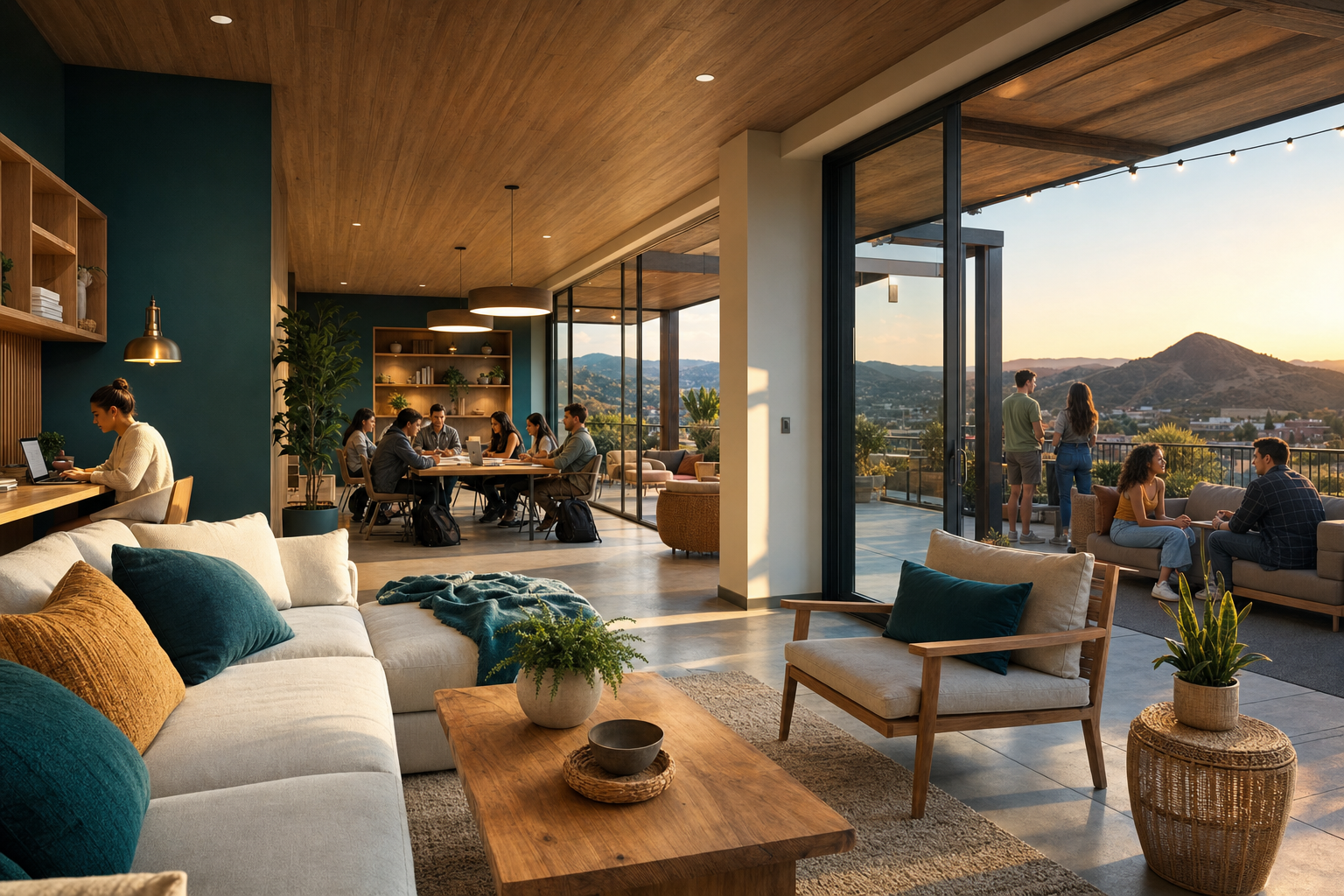
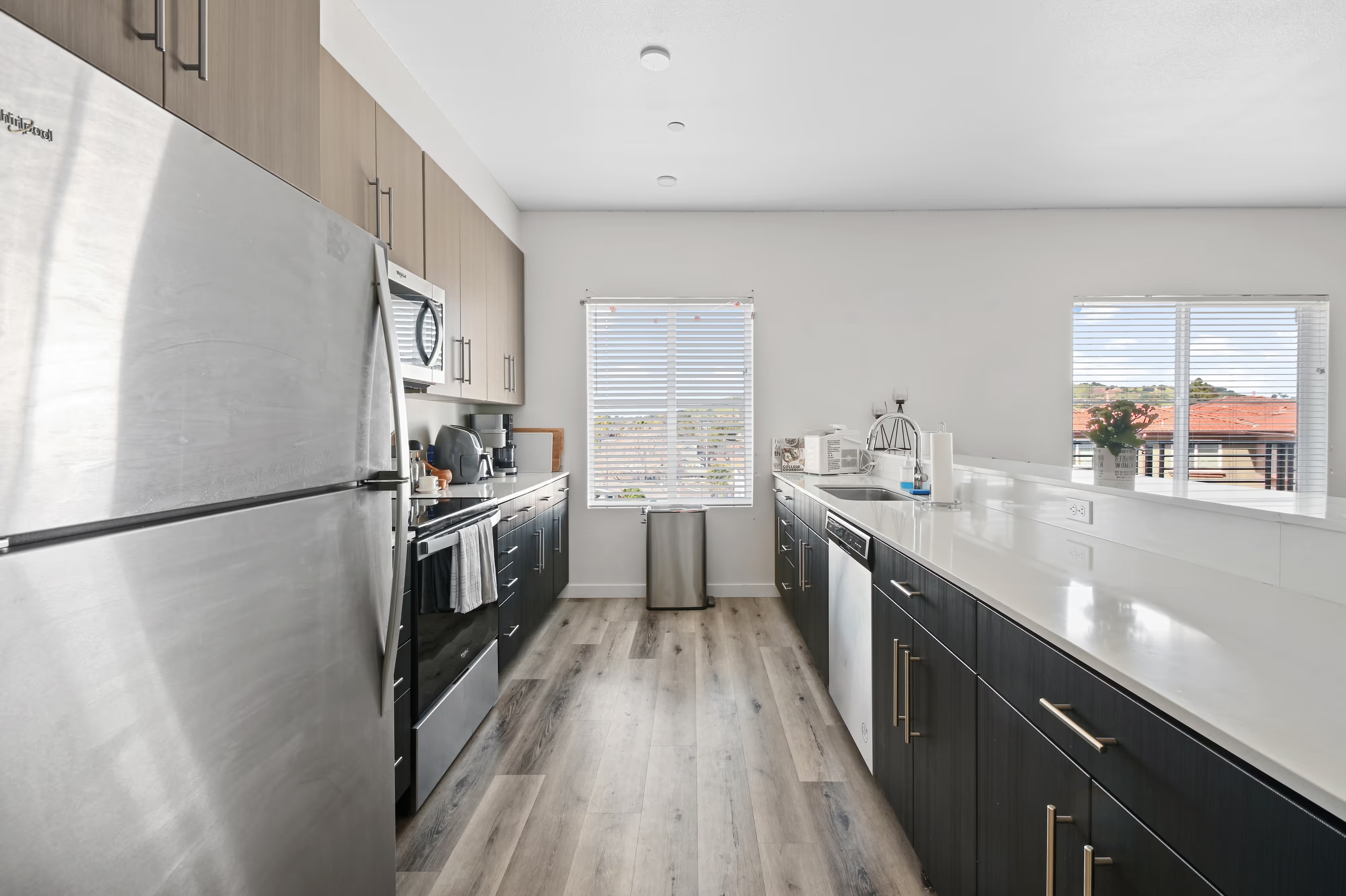
New and renovated buildings can support a more comfortable daily routine. Updated study rooms, shared kitchens, laundry areas, community lounges, elevators, air circulation, accessible entrances, and outdoor gathering spaces all influence how a residence feels after a long day of labs or lectures. Modern construction can also provide better technology infrastructure and more functional storage than students may find in older dorm rooms.
Location is another meaningful advantage. Living on or near campus can shorten the daily trip to class and simplify access to the library, recreation center, campus dining, clubs, and student employment. For students balancing Cal Poly with courses or responsibilities near Cuesta College, proximity and transportation connections deserve attention as well. A shorter commute can preserve time for office hours, group projects, internships, and the social moments that make San Luis Obispo feel like home.
Why the expansion matters
Cal Poly’s housing program is not only about adding rooms. It combines capacity, sustainability, renovation, affordability support, and campus connectivity. The university’s Housing Grant Program has grown from $890,000 to $3.6 million since 2018, offering another path toward affordability for qualifying students. Together, these changes create more ways to plan for college living at a higher altitude.
Finally, a larger residential community can strengthen connection. Shared lounges, residence life programming, peer study groups, and nearby gathering spaces make it easier to meet people beyond a lecture hall. The goal is not simply a bed behind a locked door. It is a dependable home base where students can build routines, find their people, and take on the next peak with confidence.
How to Choose Cal Poly housing planning
Strong Cal Poly housing planning starts with your student profile, not a floor plan. Identify whether you are an incoming first-year student, transfer student, continuing student, or student balancing classes near Cuesta College. Your category can affect application timing, eligibility, housing guarantees, and the residence options available to you. The two-year guarantee reported by Mustang News applies to the incoming class of 2030, so read the official terms carefully before assuming the same arrangement applies to every student.
Next, build a decision calendar around official housing deadlines. Track the application opening date, priority window, contract deadline, room-selection process, cancellation terms, and required deposits in one place. Check Cal Poly Housing updates for construction timelines and future residence information, then confirm details directly through the current housing portal. A future building may be planned or under construction without being available for your specific academic year. Keep a backup plan ready, especially if you need a private lease, shared apartment, temporary stay, or commute arrangement.
Evaluate the daily experience as carefully as the monthly cost. Review distance to classrooms, dining, recreation, transit stops, parking, grocery stores, and study locations. Ask which utilities are included, whether furniture is provided, how laundry access works, and whether the room has air conditioning, climate control, storage, accessible features, or a private bathroom. Roommate matching, occupancy, quiet hours, guest rules, kitchens, lounges, internet service, and maintenance response can shape your routine just as much as the address. Students who divide time between Cal Poly and Cuesta College should map the full trip, including walking, biking, bus connections, and late-evening travel.
Use a practical housing scorecard
Give each option a written score for total cost, contract flexibility, commute time, room configuration, study space, community setting, accessibility, security, and move-in timing. Include expenses that are easy to overlook, such as utilities, renters insurance, transportation, furniture, parking, application fees, and summer storage. For financial support, review eligibility for Cal Poly’s Housing Grant Program and current aid guidance. The program increased from $890,000 to $3.6 million since 2018, according to Cal Poly Housing, yet funding rules and award amounts still require confirmation.
Finally, separate confirmed details from projections. Cal Poly’s approved housing program includes 3,500 to 4,100 planned beds across nine buildings, with a goal of reaching 15,000 on-campus beds by 2035, according to the university’s Facilities Planning and Capital Projects information. Those plans can guide your expectations, but your lease or housing contract determines your actual space. Ask when a building will open, whether construction affects access or noise, and which amenities are confirmed. Choose the option that fits your budget and schedule today, while keeping a flexible route toward the next peak in your college experience.
Frequently Asked Questions
What is Cal Poly’s housing plan?
Cal Poly’s housing plan is a long-term campus residence program focused on adding beds, renovating older halls, and improving student access to on-campus living. The program includes new communities, updated residential facilities, sustainability standards, and financial support initiatives. Students should view it as a phased development plan rather than an immediate solution for every housing need. Building schedules, eligibility rules, and application procedures can change, so confirm current information through Cal Poly Housing.
How many new beds will be added, and when?
Cal Poly plans to add approximately 3,500 to 4,100 beds across nine buildings, according to the university’s Facilities Planning and Capital Projects program. The first new building, łktoʔ, is expected to open around 2026 with more than 500 beds, based on information from Cal Poly University Communications and Marketing. Future openings will occur in stages, so students should not assume every planned bed will be available during their admission year.
What is modular construction, and why is Cal Poly using it?
Modular construction produces sections of a building in a controlled off-site facility before transporting and assembling them at the campus location. This method can support a more organized building schedule, reduce certain on-site activities, and help a large housing program move forward efficiently. It does not mean that the finished residence is temporary or lacking standard residential features. Cal Poly’s new halls are targeting LEED Gold certification, which addresses energy performance, water use, materials, and indoor environmental quality.
Will on-campus housing be guaranteed for two years?
Cal Poly has announced a two-year housing guarantee for the incoming class of 2030, as reported by Mustang News. Students should review the official terms to confirm who qualifies, which academic years are covered, and what steps are required. The guarantee does not necessarily promise a particular residence hall, room type, roommate, or rate.
Which residence halls are being renovated or replaced?
Existing residence halls are scheduled for renovation. Updates may address building systems, accessibility, shared spaces, finishes, and student comfort. New construction is being planned alongside these improvements, giving Cal Poly a way to expand capacity while refreshing parts of the existing residential network. Follow project notices before making a housing decision, since construction timing can affect availability, access routes, and the living experience.